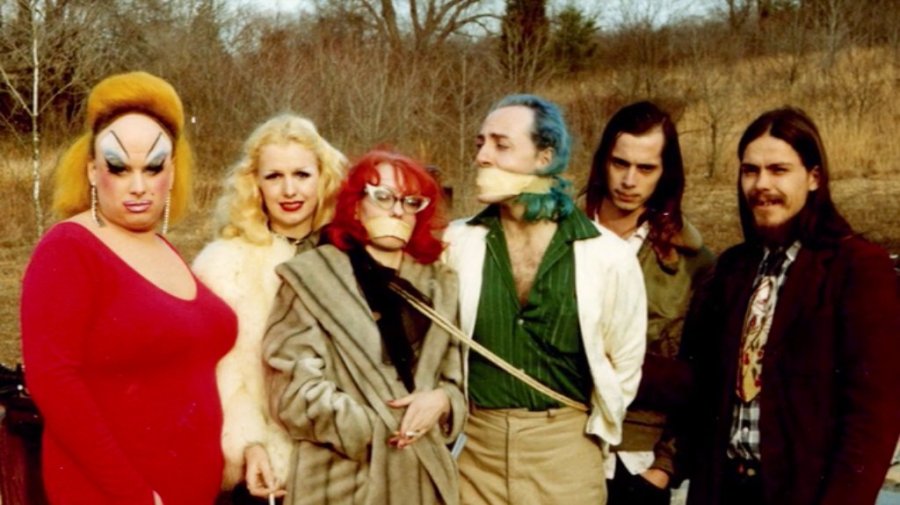
This article is the first in a series I’m calling the Trash Triptych in which I’ll be looking at the John Waters movies Pink Flamingos (1972), Female Trouble (1974) and Polyester (1981).
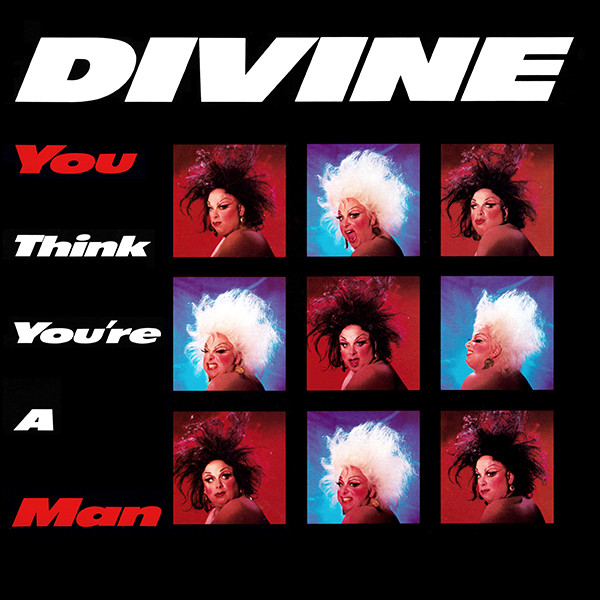
My introduction to John Waters was actually an indirect one. It’s Thursday 19th of July 1984 and I’m watching Top of the Pops. I bear witness to a performer the likes of whom I had never seen before. Divine was performing his fantastic single ‘You Think You’re A Man’ which was produced by up-and-coming new production team Stock, Aitken and Waterman. This was a grittier form of HI-NRG performed by a 300 lb drag terrorist. I was hooked. I also loved that at one point the camera appears to pan round Divine’s considerable bulk almost like a NASA exploratory spacecraft exploring alien territory. Viewers would ring the BBC in their droves to complain about this ‘woman’ and her ‘obscene’ performance. I wanted to ring in and congratulate them profusely. My life was changed.


I would then have to wait to see more of Divine. I learnt that he had starred in underground films by a director called John Waters. I would read snippets about these in movie and video magazines especially the cult film publications from America. But during these days and especially in the climate of the Video Nasties moral panic, the possibility of seeing these fabled movies was extremely narrow.
It was with the release of Hairspray in 1988 on home video that I’d get to see my first Waters movie. Because of this release, there was also a reprint of Waters’ book Shock Value which I bought and is still to this day one of my favourite books. Trash Trio, a compendium of three screenplays of his movies would also be reprinted.
And then it happened. Waters’ early films were released on home video here in the UK! Whilst this was a life-changing event for me, it was also a bitter-sweet experience as the British Board of Classification had cut them extensively. But I knew with time that common sense would prevail and we would eventually get to see them uncut. I just didn’t know how long that would take.

It was great to finally get to see Pink Flamingos, a film whose reputation seemed to be approaching almost mythic proportions in cult film circles. The film concerns Divine starring as erm, Divine, an icon in the underground press and official holder of the title The Filthiest Person Alive. She’s living in hiding in a trailer in Phoenix, Maryland with her egg-obsessed mother Edie (Edith Massey), her hillbilly (and very cute) adult son Crackers (Danny Mills) and their travelling companion Cotton (Mary Vivian Pierce). However, a couple, Raymond and Connie Marble (David Lochary and Mink Stole) are jealous of Divine’s infamy and plan to seize her crown by showing that they are filthier. They live with their butler Channing who apart from being the Marble’s all-round dogsbody also comes in handy for one of their sidelines- they kidnap young women and keep them in their basement where they are impregnated by Channing. The babies are then sold to lesbian couples. They reinvest the money into a heroin ring that they run in the city’s elementary schools as well as having a number of porno shops. The Sound of Music this aint.
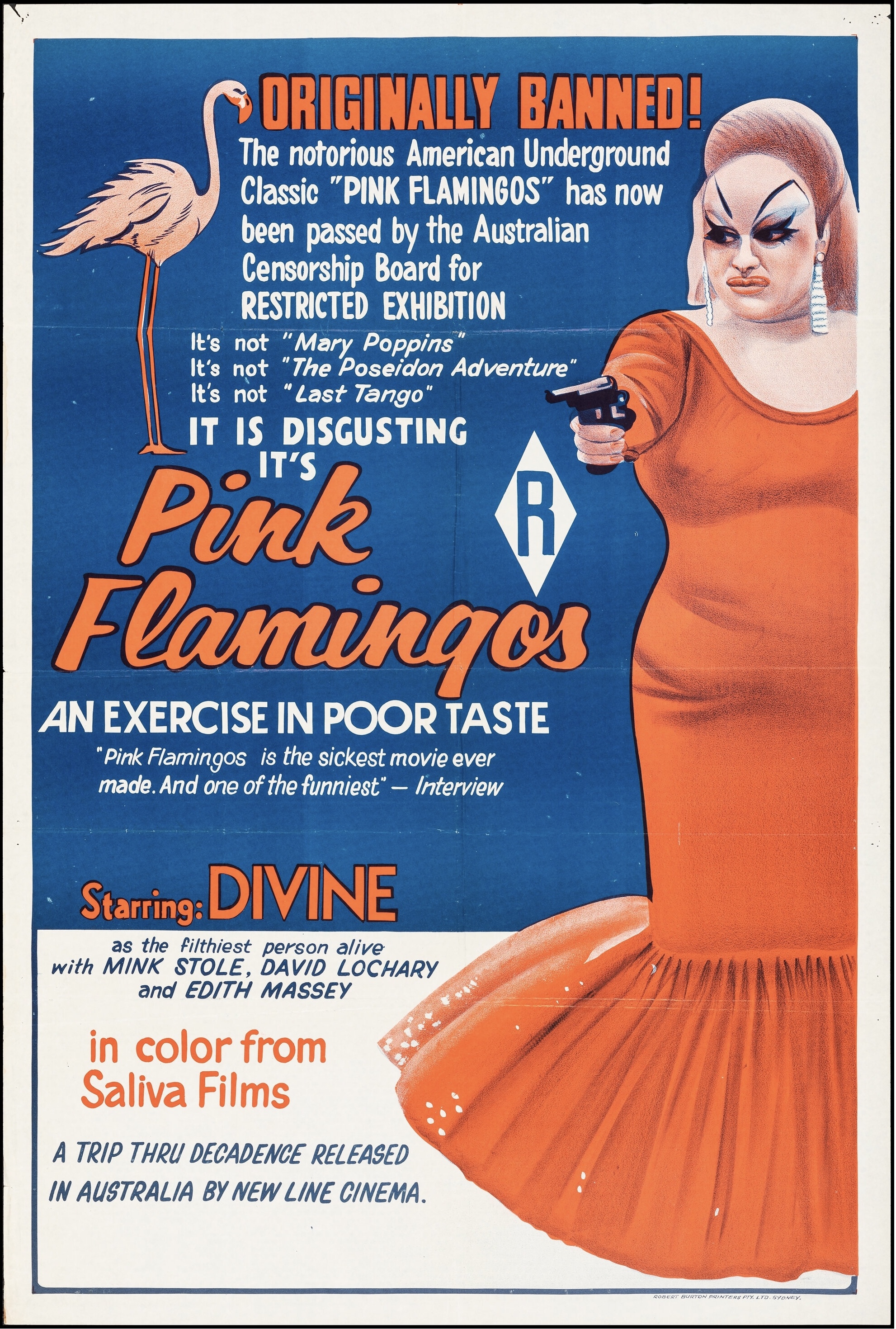
Pink Flamingos has a reputation as one of the most shocking films ever made and was never going to bode well with the BBFC. Indeed, just as the film has a reputation as one of the best cult films ever made, a strand of its legacy also mines into classification in Britain and what happened when home video was introduced. In the early days of the medium, there was no legal need for videos to be classified by the BBFC and so distributors would release anything they wanted. This meant that these early days were akin to a Wild West. The goriest horror films and the grittiest exploitation movies were available at your local video store and fully uncut (ahh, the good ol’ days!) Another facet of these ‘pre-certification’ days was that the artwork for these videos was just as lurid as the actual content of the films themselves. All of this would backfire massively with legislation being introduced after a huge moral panic regarding these ‘Video Nasties’ which would mean that all movies released on video would have to be classified first by the BBFC with even more stringent censorship and some films being banned outright as a further result of the furore regarding home video. Pink Flamingos wasn’t submitted to the board for classification at this time even though it had been released uncut by Palace Video when the BBFC could be bypassed. This was probably a wise move.
However, when Castle Home Video submitted the film to the BBFC in 1990 for home video, several scenes were cut. These cuts will illustrate the kind of content that Pink Flamingos was notorious for. The scenes cut were the chicken fuck, the Marbles’ butler Channing masturbating into his hand and then impregnating a captive woman via a syringe, the singing anus, Babs fellating Crackers and, of course, the dog shit finale. This totalled cuts of 3m 4 secs.
The next time the film would go before the board would be for the 1997 25th anniversary cinema release. This time the singing anus cut would be waived but all other content previously excised would remain that way. This totalled cuts of 2m 42 secs. I remember going to see the film at the cinema and the dog shit scene was shown as stills rather than as a live-action sequence.
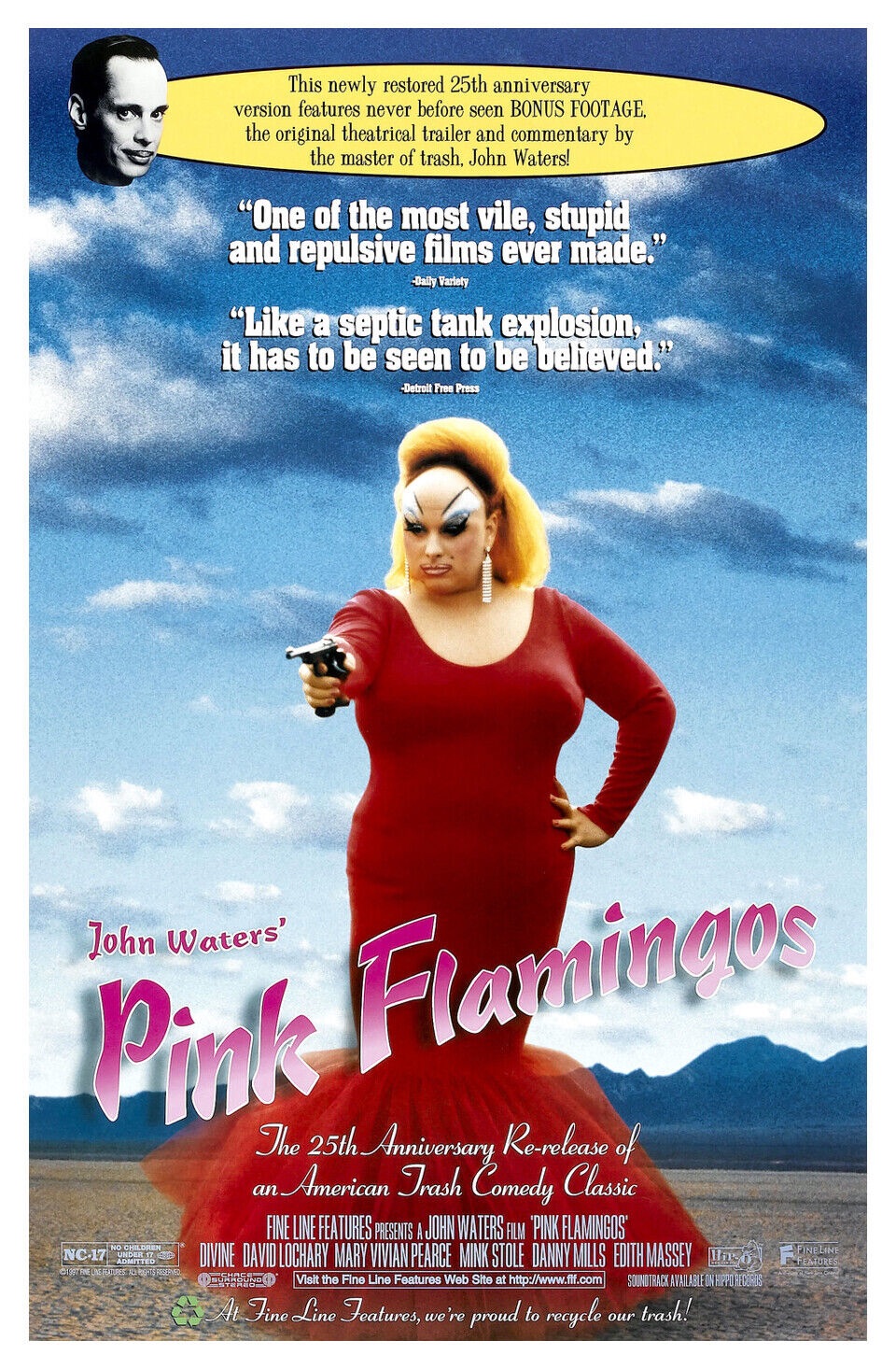
1999 would see a proposed video release for the 25th Anniversary Edition as the BBFC would yet again rule as to what was suitable for home viewing and what wasn’t. On this occasion, the dog shit scene was put back into the film. The cuts now totalled 2m 08 secs. As you will see, as time goes by more material is finding its way back into the film.
Interestingly, the film was also submitted to the board in 2008 for a proposed DVD release. With the passage of time, the BBFC would now make the decision that all previous cuts could be waived and that Pink Flamingos was suitable to be released uncut. Ironically, the release was cancelled by the distribution company who didn’t even get to hear the verdict passed down by the board.
In 2022, Criterion took the film to the board for a release on Blu Ray and for the first time the film would be released completely uncut here in the UK with all previous cuts waived.
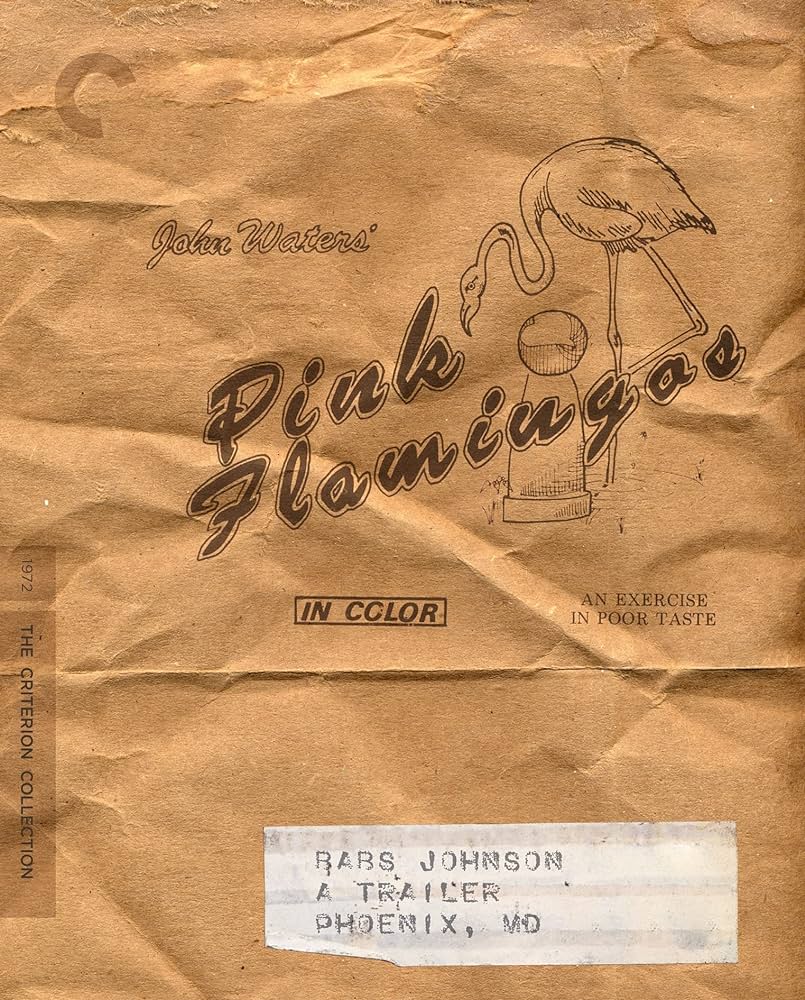
Pink Flamingo’s censorship journey mirrors that of so many films that were judged to be obscene and worthy of censure decades earlier as moral campaigners (i.e. puritanical busybodies) such as Mary Whitehouse set out to find ways of stripping the general public’s lives of fun of any kind. It’s so great to see that common sense and sanity have prevailed as I knew they would and that Pink Flamingos and Waters’ work, in general, can be seen for what it really is- high art. It’s karma that such a highly esteemed label and distribution company such as Criterion would give several of Waters’ works the treatment and respect they so richly deserve.
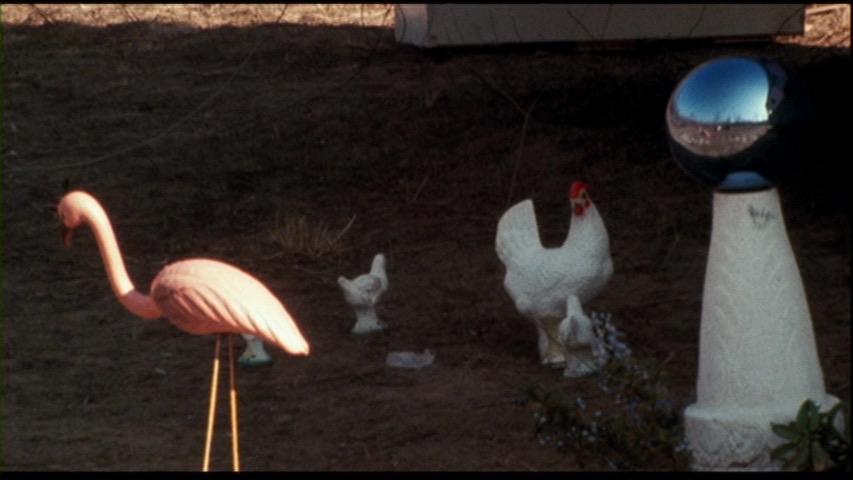
But in 1990, even though I was getting to see Pink Flamingos for the first time in this censored form, there was plenty I could glean from the film. One thing that I noticed was the world that Waters had created. The styling of the film is just one example of this. Waters’ world within the film consists of decor and fashions that at one time were mainstream, fully accepted by the general public and mass-produced for mass consumption. But now they had slipped out of fashion and were viewed with derision and ridicule. They were at the time of the film’s production seen as tacky, out of date and a signifier of low or bad taste (one of the film’s taglines was ‘An Exercise in Bad Taste’). Waters and set designer Vince Peranio have purposely brought them back and placed them centre stage so that they can have another moment of glory by those who see them as typifying excellent taste. We have the zebra print rug of Divine’s trailer, the pink flamingo ornament and gazing ball outside, the 50’s physique beefcake pin-ups in Cotton’s room to exemplify some of the decor choices made within the movie. Why, the very fact that they live in a trailer is trash in itself. But, this wasn’t Waters sniggering at the working class or trying to show that he was better than anyone. These were irony-free choices. In fact, he said that he hates to see people who have miniature pink flamingos as ornaments as it feels like the aping of working-class tastes by elitist hipsters. This was Waters literally showing his taste preferences whether people liked them or not.
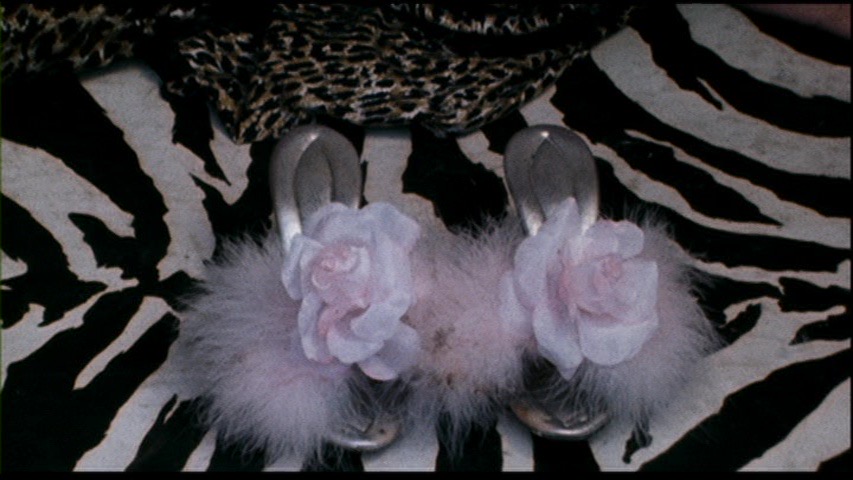
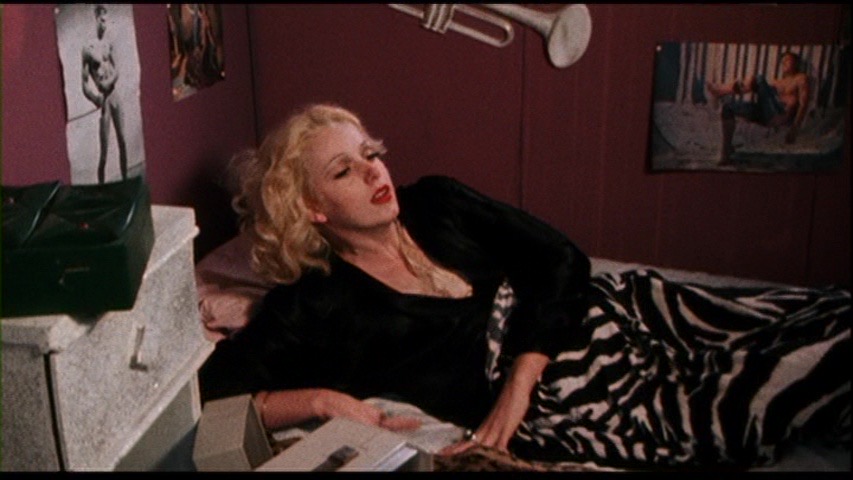
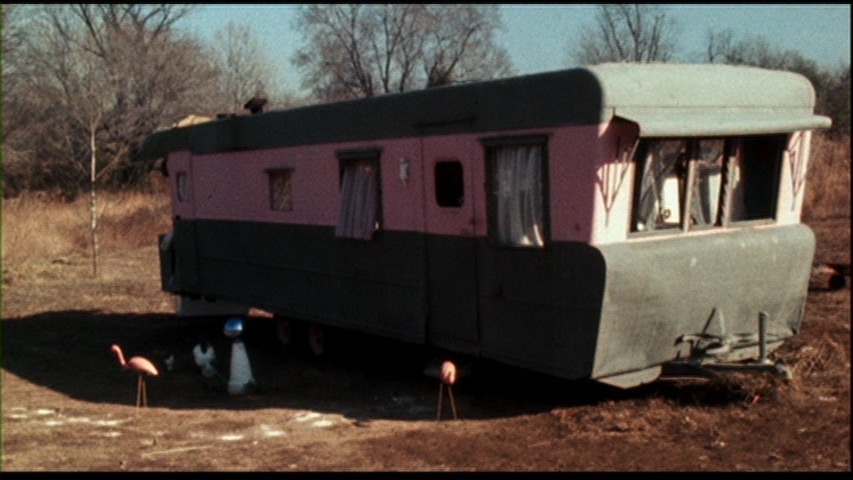
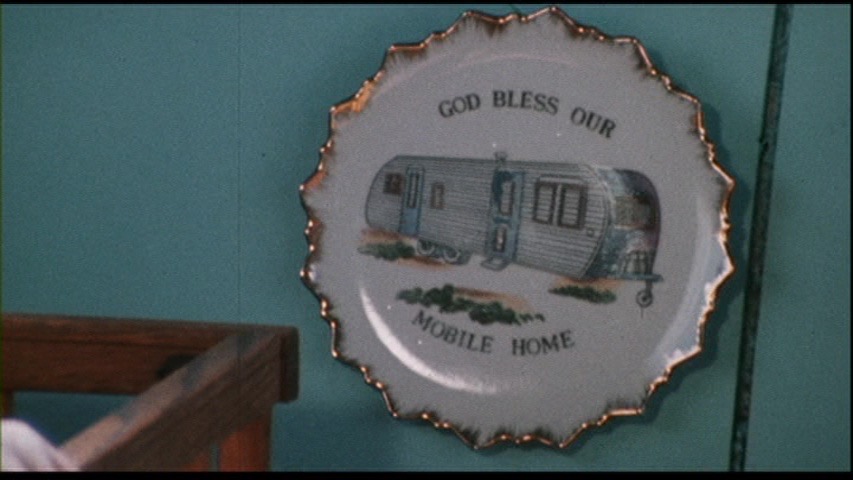
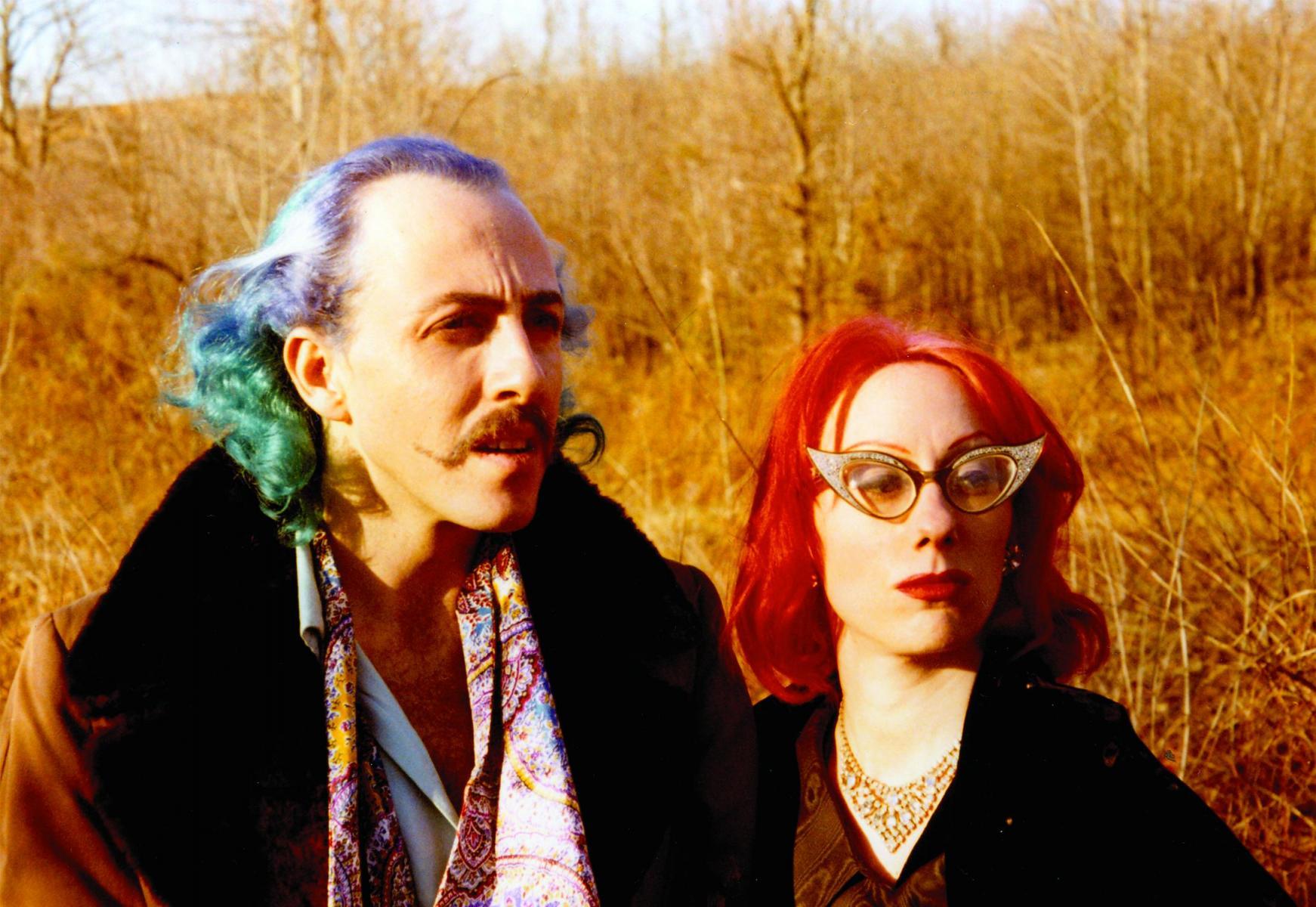
When it comes to fashions within the film there are the retro fashion choices of Divine with her figure-hugging creations (think Jayne Mansfield or Diana Dors on crack) which were never intended for someone who weighed 300lbs, the 1920s blonde bombshell sensibilities of Cotton (she reminds me of Jean Harlow) and the cat eyeglasses of Connie Marble. These are all garments and accessories that went out of fashion but could be found in the thrift shops of early 70’s Baltimore and so could be bought, adapted and used as the film’s wardrobe.

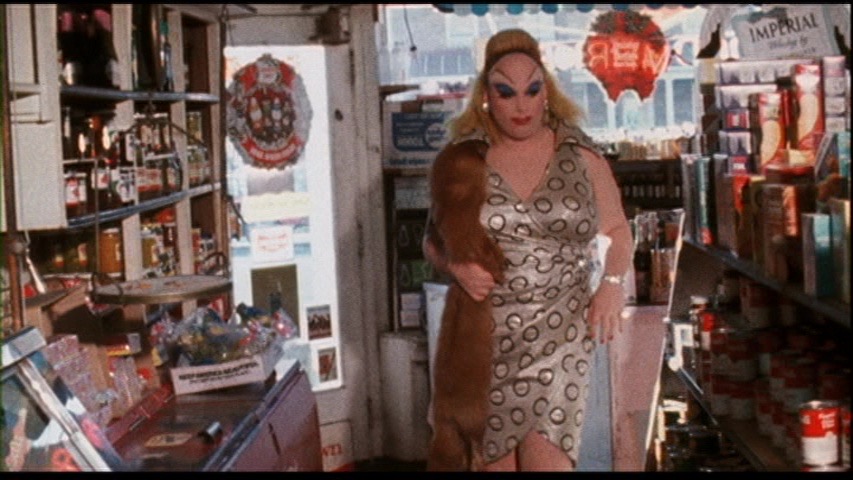
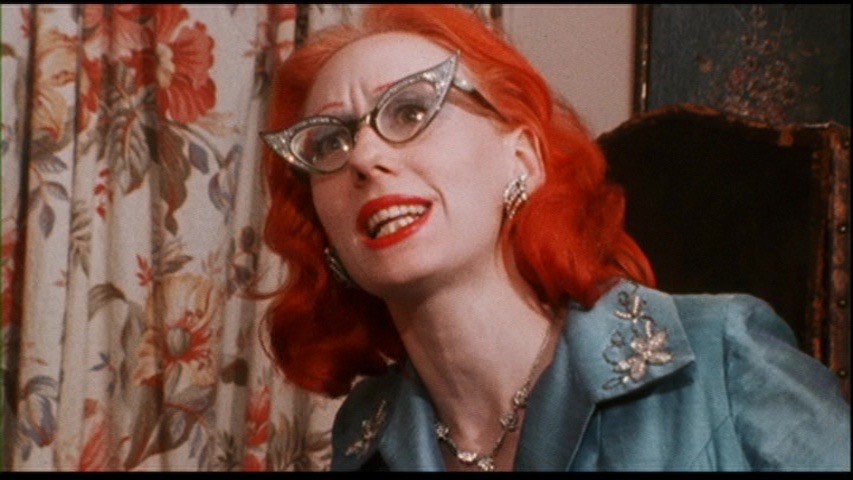
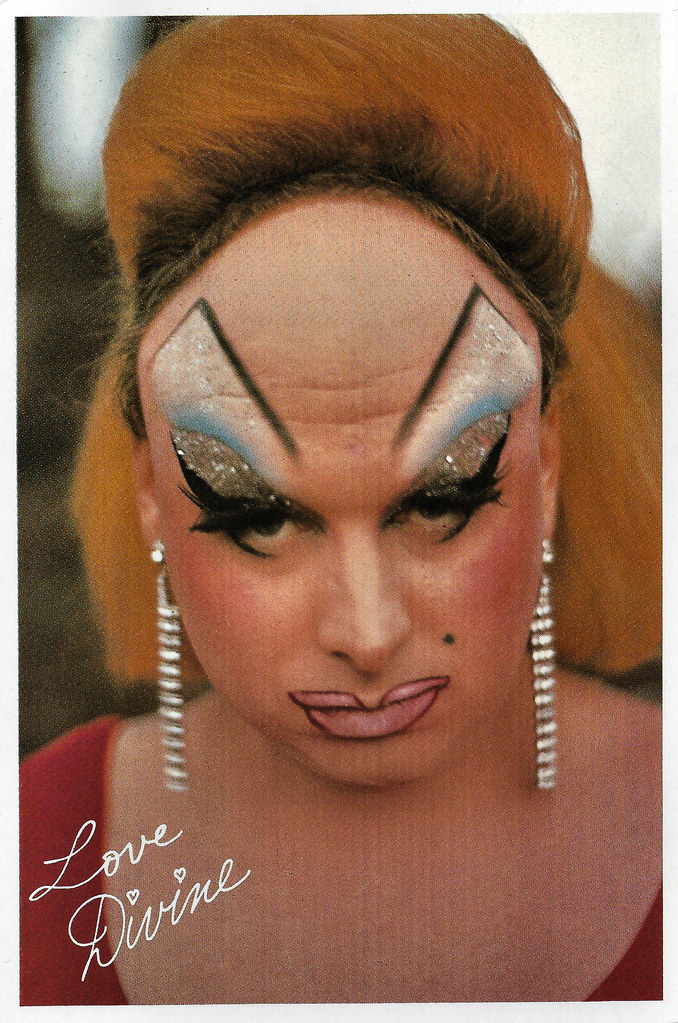
And then there’s the make-up used in the film. Divine’s features are accentuated and exaggerated. John Waters has said that he knew Divine when he was dressing as a more conventional drag queen and that it was Van Smith, the film’s make-up artist and ‘ugly expert’, that helped bring out the more extreme aspects of Divine’s persona. His make-up is part Clarabell The Clown and part John Wayne Gacy. At a time when female impersonators were very conservative and wanted to be ‘realistic’ and pass as female, Divine was the drag equivalent of Godzilla.
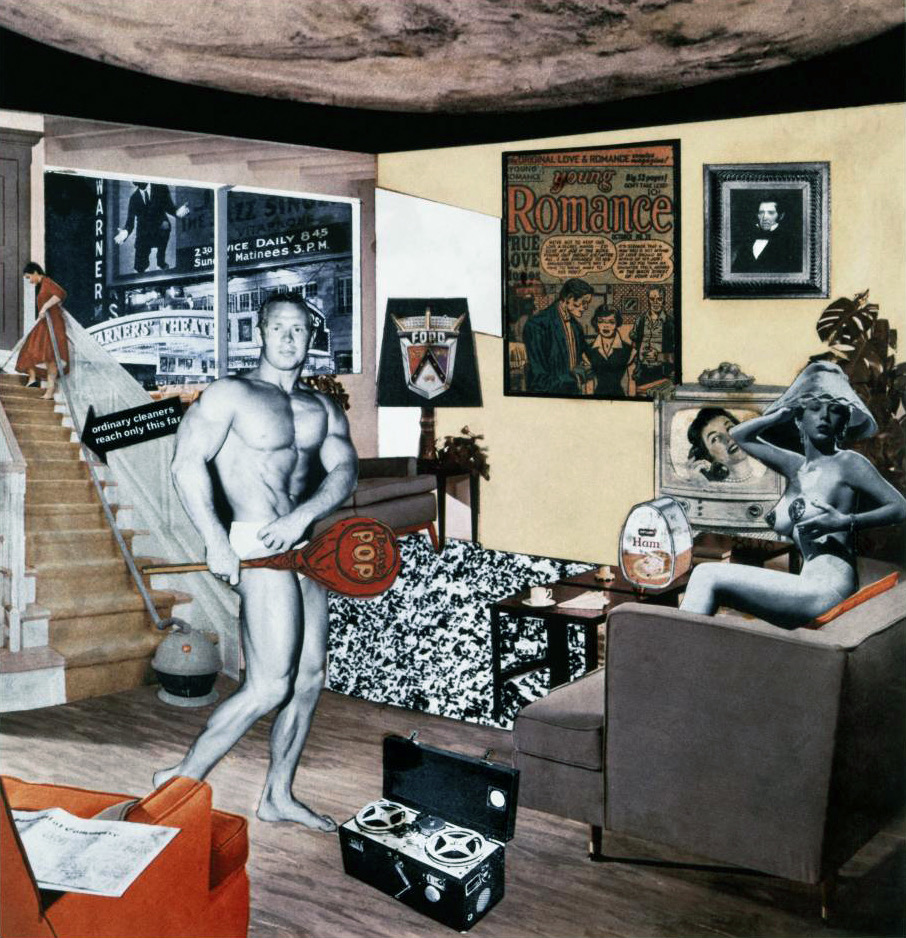
This stylistic sensibility regarding decor, dress and make-up within Pink Flamingos shows that Waters, Peranio and Smith were way ahead of the curve. Part of this sensibility can be traced back to the famous collage entitled ‘Just what is it that makes today’s homes so different, so appealing?’ and the ensuing pop art movement in general. But whilst these brought into the spotlight the past and present pop culture iconography that could be unashamedly put on a pedestal, Waters, Peranio and Smith seemed to revel in bringing forth the cultural artefacts and signifiers that certain purveyors of taste would cluck at. In 1972 when the film was made there was no name for this taste and the fact that it was being taken seriously rather than ironically. A few years later The B-52s also displayed this sensibility in spades. The Cramps would use the darker references of the past which some would see as ‘low culture’ and bring them forward and fuse them with their fantastic music which was part punk, part rockabilly and part Goth even though that genre didn’t even exist yet.
It would be years before hideous terms such as ‘kitsch’ and ‘tacky’ would be applied in sneering terms to the kind of artefacts and sensibilities used in Pink Flamingos. These terms were used merely to devalue them and disallow them from being taken seriously. Hipster losers would profess to loving such items and fashions but in an ‘ironic’ sense with an all-knowing and vomit-inducing wink to camera (any camera).
As Waters said later “Irony ruined everything. I wish my movies could have played at drive-ins, but they never did, because of irony. Even the best exploitation movies were never meant to be ‘so bad they were good.’ They were not made for the intelligentsia. They were made to be violent for real or to be sexy for real. But now everybody has irony. Even horror films now are ironic. Everybody’s in on the joke now. Everybody’s hip. Nobody takes anything at face value anymore.”
Another signifier of authenticity within the film was the blurring of the lines between the actors and the characters they portrayed. Pink Flamingos would be another Waters film in which the actors’ names would be the same as the names of the personas they portrayed within the movie, in this instance Divine, Edie and Cookie.
Danny Mills’ character of Crackers may have long hair but he’s anything but a hippy. He looks more like a member of the Manson Family with the film being peppered with references to the infamous gang. Manson was a huge influence on the movie as Waters had attended the trial just before starting work on the film. There are Manson references aplenty within Pink Flamingos. It’s worth mentioning that Waters now seems rather ashamed of these references as he later befriended one of the Manson Family (Leslie Van Houten) and campaigned for her parole to be granted. This happened on July 11th, 2023 when she was the first of the Manson Family to be freed.
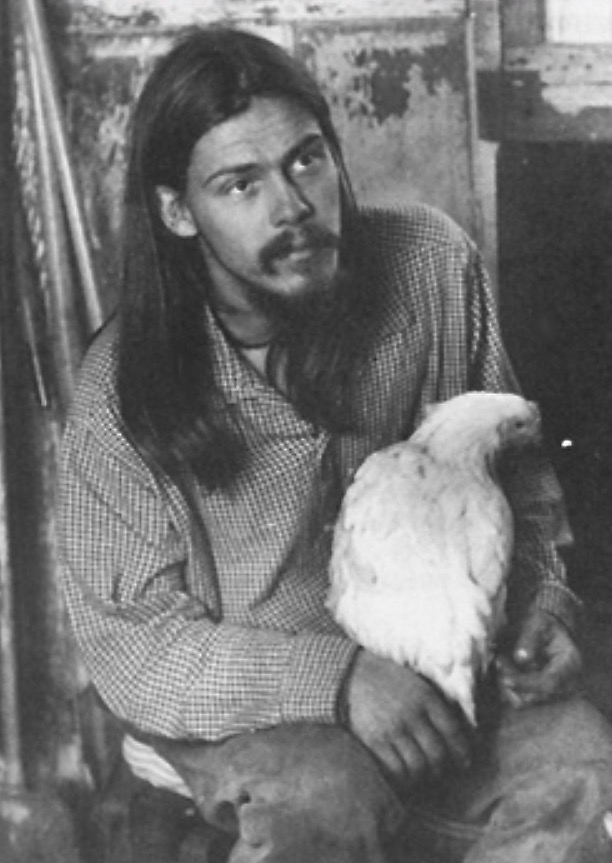
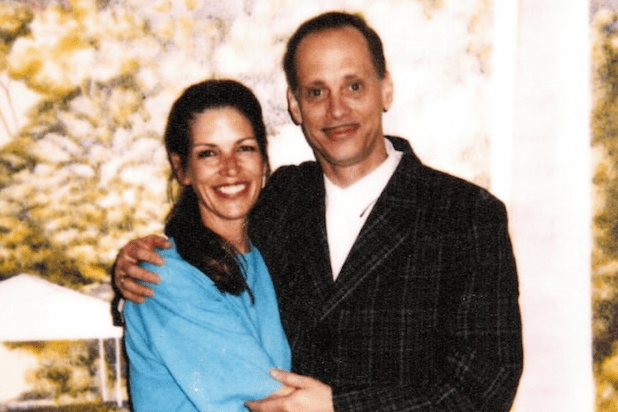
The film is dedicated to ‘Sadie, Katie and Les’ (Susan ‘Sadie’ Atkins, Patricia ‘Katie’ Krenwinkel, Leslie Van Houten). There’s a scene in which Divine sashays past graffiti that says ‘Free Tex Watson XXX’ and Connie Marble has a picture of Sadie Atkins in a frame on a sideboard. Theres also a deleted scene in which Crackers and Cotton invade Cookie’s home, kill her mother and then kill her. The reference to ‘rivers of gore’ within this scene also completes the very Manson-esque tableau.


These edgy and gritty references show that the film has a spirit that is countercultural but not in a hippy sense (Waters says in the Director’s Commentary for the film that he hates the naive innocence of the hippies who believed that love will cure all of the world’s ills) but more in line with the Yippies, the youth movement that undertook more radical activism and also believed in washing their hair. In fact, there’s even a scene in which Connie openly criticises hippies as she and Raymond are driving around trying to find a young woman to ‘procure’. This scene may have also influenced some of the lyrics to Sex Dwarf by Soft Cell with its references to chauffeurs and procuring young women for nefarious means.
In fact, Pink Flamingos can be seen as counter-countercultural if the hippies constitute the counterculture. The film’s ethos is also more in line with Punk even though the movement hadn’t been devised yet. It’s worth noting that these early films of Waters can all be seen as being ingredients in the formation of Punk and fed into its gestation. In fact, Desperate Living which was released in the peak Punk year of 1977 was retitled Punk Story in foreign territories.
On a visual level, the hair colour of Connie, Raymond and Divine is pure punk with no one ever having seen red, blue and bright yellow hair before (achieved in some cases by using the ink sponges inside magic markers). But, it’s the whole rejection of society’s conventions and institutions that is an integral part of the film’s ethos. We have characters who stand out and are proud of it in a world in which most people want to blend in.
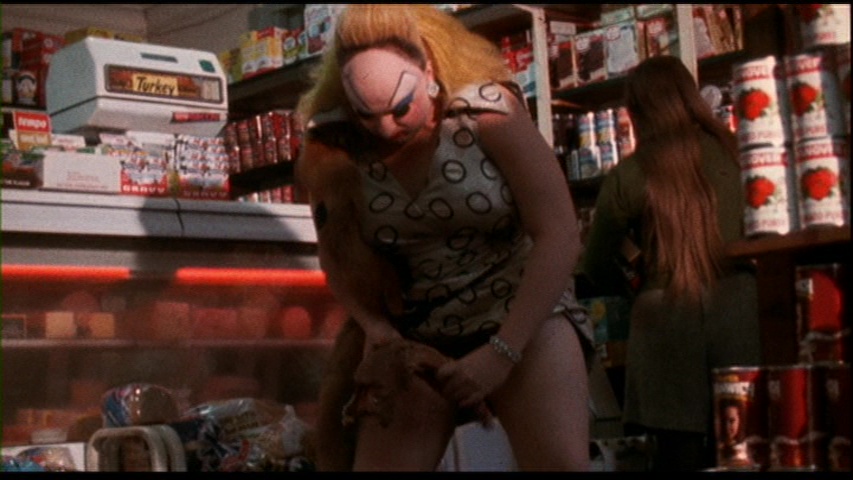
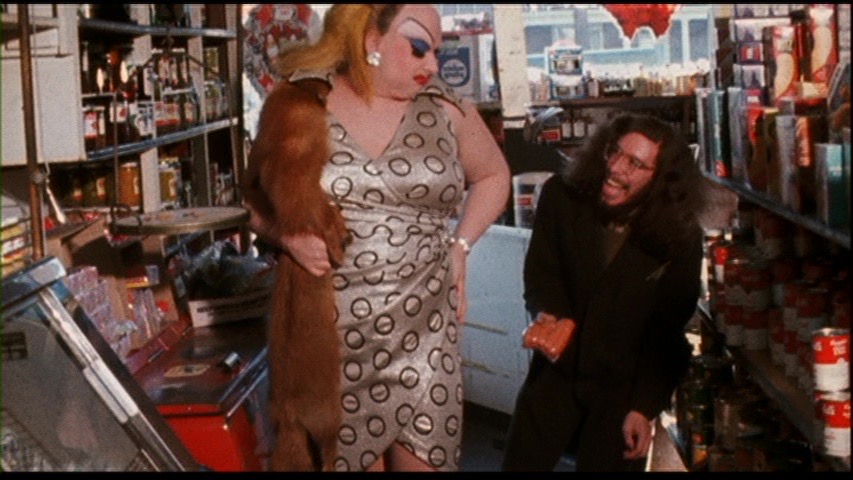
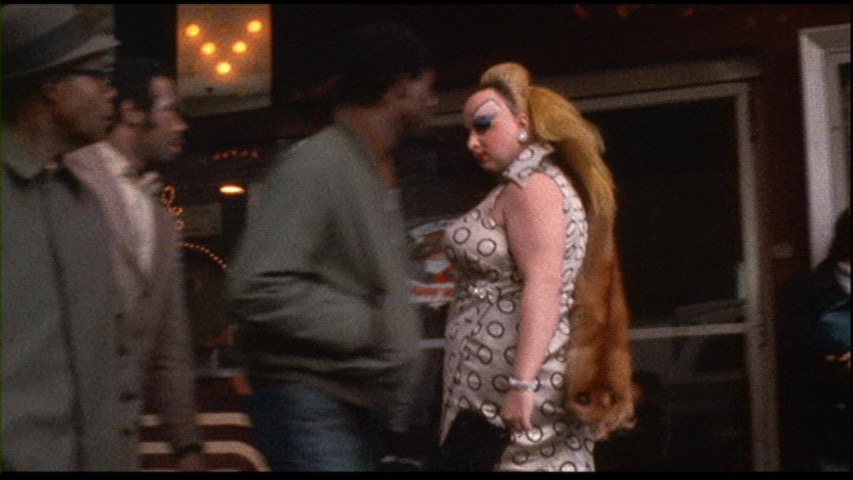
Divine’s trip into downtown Baltimore exemplifies the punk ethos of rebellion perfectly. The trip is enlivened for both Divine and Crackers as they try to run over a jogger and then pull over for a hitchhiking soldier but peel off as he gets to their car. They even flip him the bird as they drive away laughing. The very distinctive-looking Divine is shown to have the confidence of a supermodel on a runway as she traverses downtown Baltimore and it’s here that she passes the Free Tex Watson graffiti. As Divine buys a huge steak and decides to store it in her ‘own special little oven’ (guess what that is), she is drolled over by a fellow freak who is clutching and squeezing a packet of Frankfurters provocatively. The world of Pink Flamingos has freaks aplenty. We then get to witness more of Divine utterly owning the streets of Baltimore as she walks past unsuspecting and agape shoppers (Waters filmed this sequence from a car window) who look at her as if she’s from another planet. Divine is shown as a 300 lb very vibrant splash of colour as opposed to the somewhat dowdy and boring members of the populace. We then even get to see Divine urinate and wipe herself on the lawn of a big grand condominium.

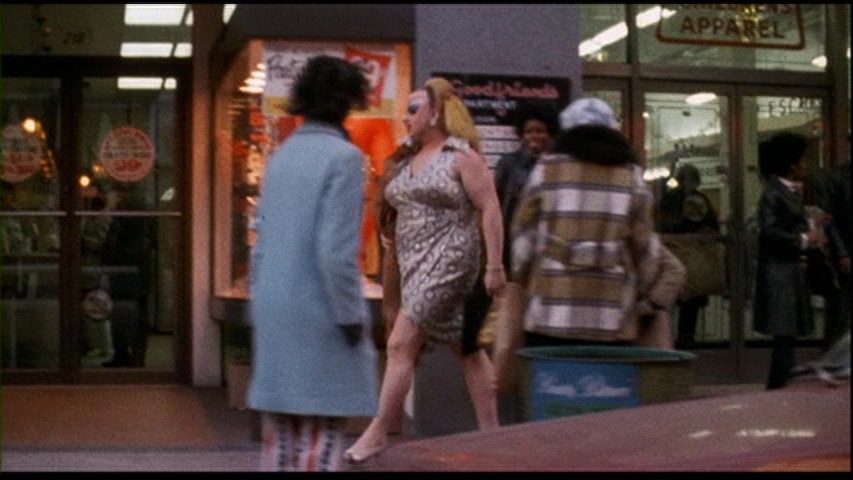
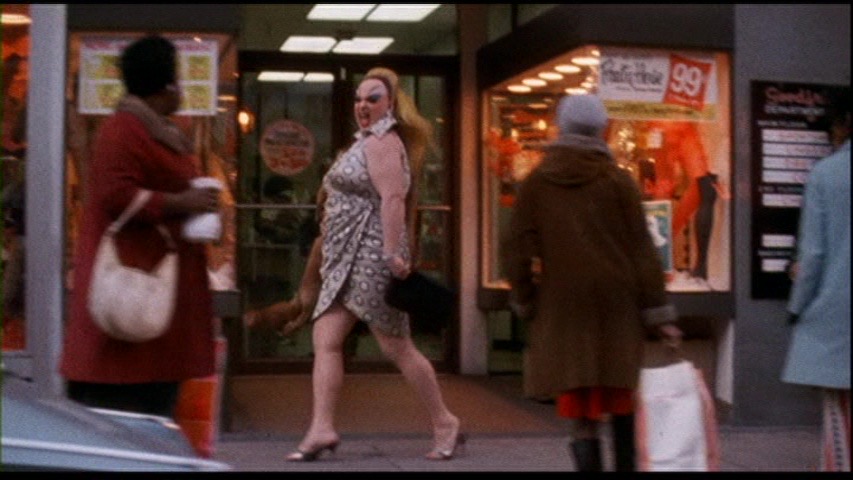
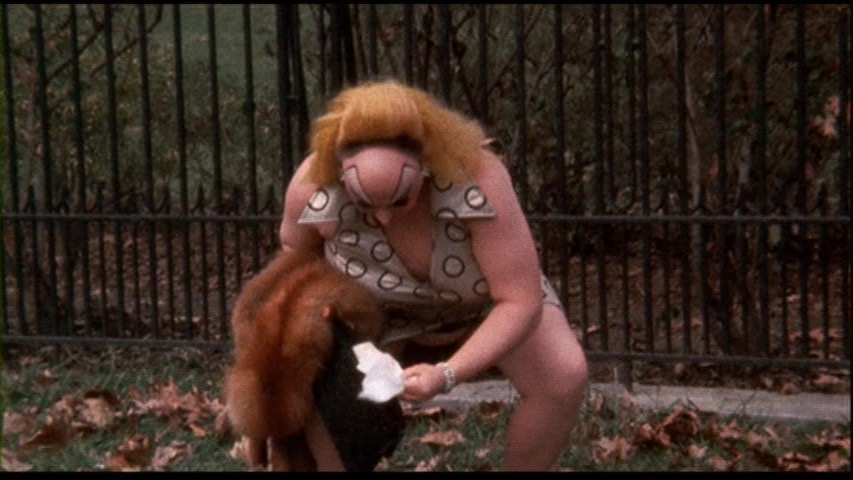
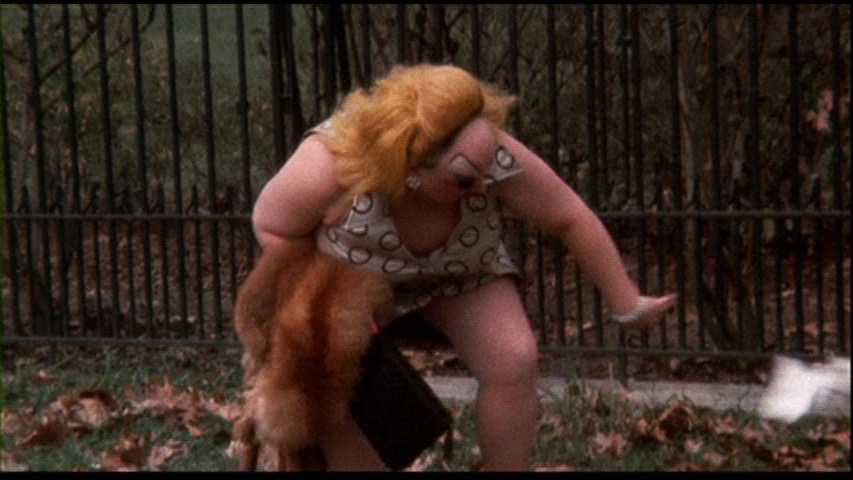
The end of this sequence could be seen as a symbol of Divine and gang’s hatred of domesticity and convention which is also in step with the future punk ethos. The fact that they live in a trailer is a clear rejection of domesticity. After the Marbles have burnt their trailer down and been executed by Divine and co, they decide to move to Boise, Idaho and sleep on gas station lavatory floors to strengthen their filthiness. This could also be seen as a further rejection of domesticity and conventional society. The scene in which Divine and Crackers invade Raymond and Connie’s home can also be seen as a literal snubbing of domesticity as they go through each room and ridicule their taste in decor and lick all of their furnishings so that this action results in the house literally rejecting them. There’s even a deleted scene in which Divine remarks ‘Central heating. How repellent!’
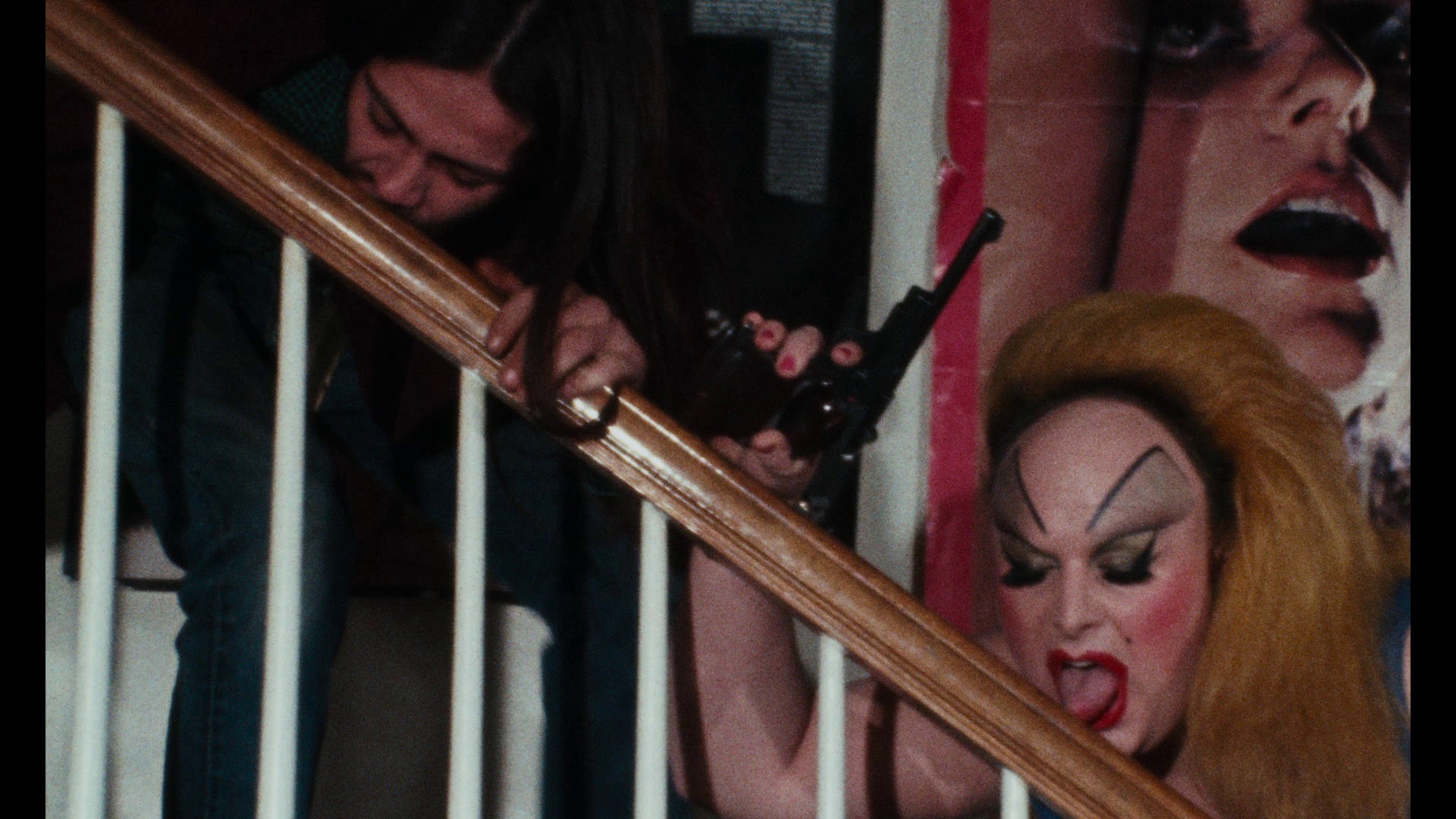
The scene in which a mailman goes to Divine’s trailer to deliver the gift-wrapped turd from Raymond and Connie is also very telling regarding ‘normality’ and domesticity. Not only are they naturally suspicious as they have no address but the idea of being sent a gift (even a turd) is far too normal and pedestrian for the Filthiest Person Alive.
The scene in which Divine et al exact justice on Raymond and Connie is also pure punk in its ethos. We are given a peek into the world of ‘mondo’ culture as all of the journalists from the leading underground newspapers are there to record events which include a kangaroo court and execution of the challengers to Divine’s crown. We get journalists from such publications as the Verity, Midnight and Tattler, there to witness live homicide as a declaration that Divine is indeed still the Filthiest Person Alive and that anyone who tries to seize her title will be dealt with accordingly. These publications seem to foreshadow the fanzines that would spring up to document punk and its movement.
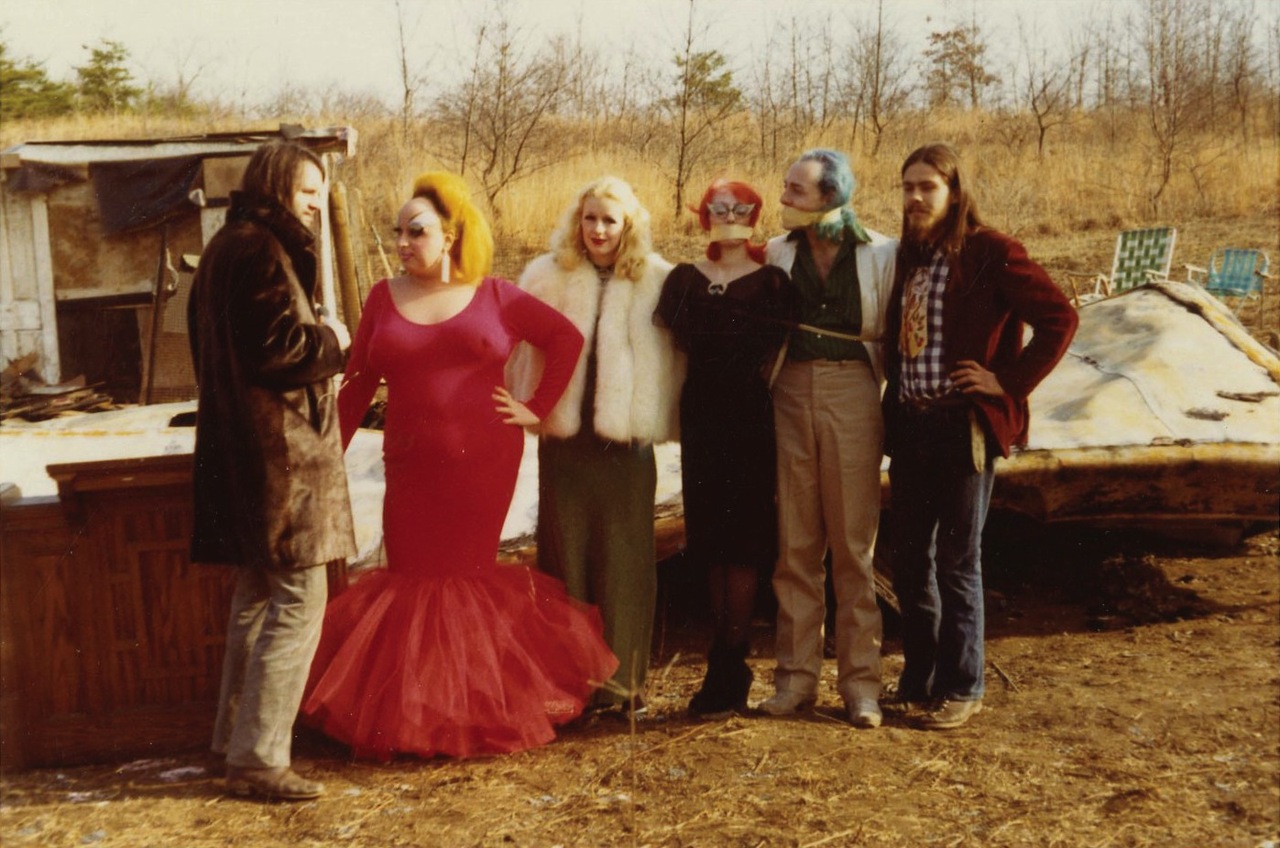
It’s within this scene that we also get Divine’s iconic speech which lifts the lid on her philosophy and some of the rules by which she lives her life. This rant is extreme but constitutes a complete rejection of society’s mores and conventions in the context of the movie. ”Kill everyone now! Condone first-degree murder! Advocate cannibalism! Eat shit! Filth is my politics! Filth is my life!” I also love how she states the crime that Raymond and Connie are guilty of in her eyes is that of assholism. This echoes the speech that Connie gives to a failed applicant for the position of a prospective spy she seeks to employ to snoop on and gather information about Divine- ”I guess there’s just two kinds of people, Miss Sandstone: MY kind of people, and assholes. It’s rather obvious which category you fit into. Have a nice day”
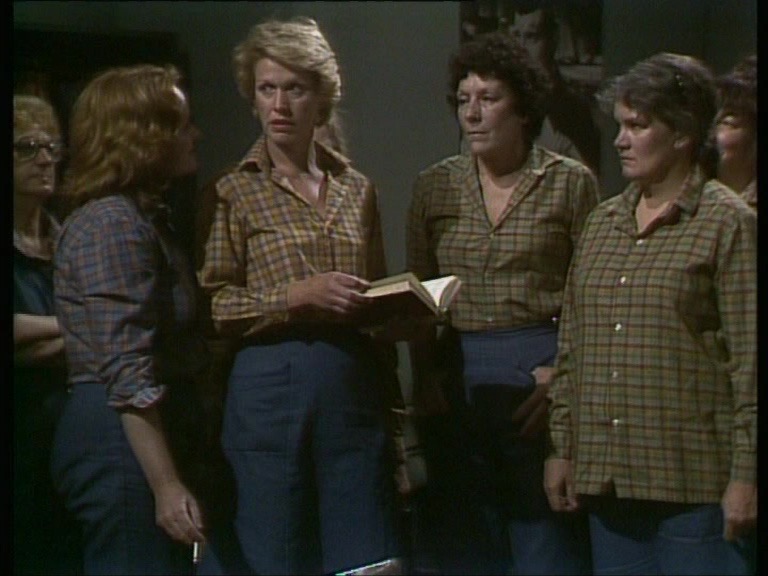
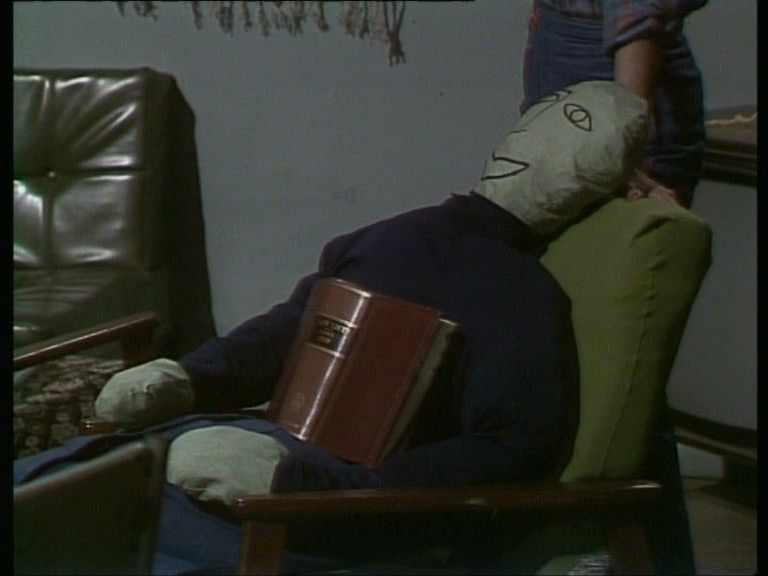
I love this kangaroo court scene which ridicules the flawed American judicial system and reminds me of a similar kangaroo court held in an episode of the cult Australian women’s prison drama Prisoner: Cell Block H. A highly thought of prisoner has completely disappeared and it’s thought that another inmate, Kate Peterson has killed her even though there is no evidence of this and no body has been found. The judge in the proceedings is shown to be a dummy (‘All judges are dummies!’ remarks Top Dog Bea Smith during the proceedings) wearing the missing prisoner’s clothes.
In fact, it isn’t just the lead characters who are wonderfully esoteric. It would appear that they have plenty of friends and others who are just as unique as them. This is marvellously depicted in the birthday party scene. Babs aka Divine has invited a group of friends over to help celebrate her birthday. But, this is a celebration with notable differences. For one, Divine receives her own brand of birthday presents- A-200 crab medicine, a pig’s head from Cotton, an axe from Crackers and amyl nitrate from another well-wisher. There’s even entertainment by way of a stripper with a snake and a man with a singing anus (yes, really).


There is even more anti-authority/punk rock ethos in the form of the gang all hiding when the police arrive (the fuzz have been tipped off by Raymond and Connie) and then jumping out to attack and kill them. There’s even a reference to another midnight movie, Night of the Living Dead as the guests including Divine et al are shown feasting on the dead cop’s body parts. The scene in which the party guests pursue the cops is like Fellini on crack (which is really saying something!)
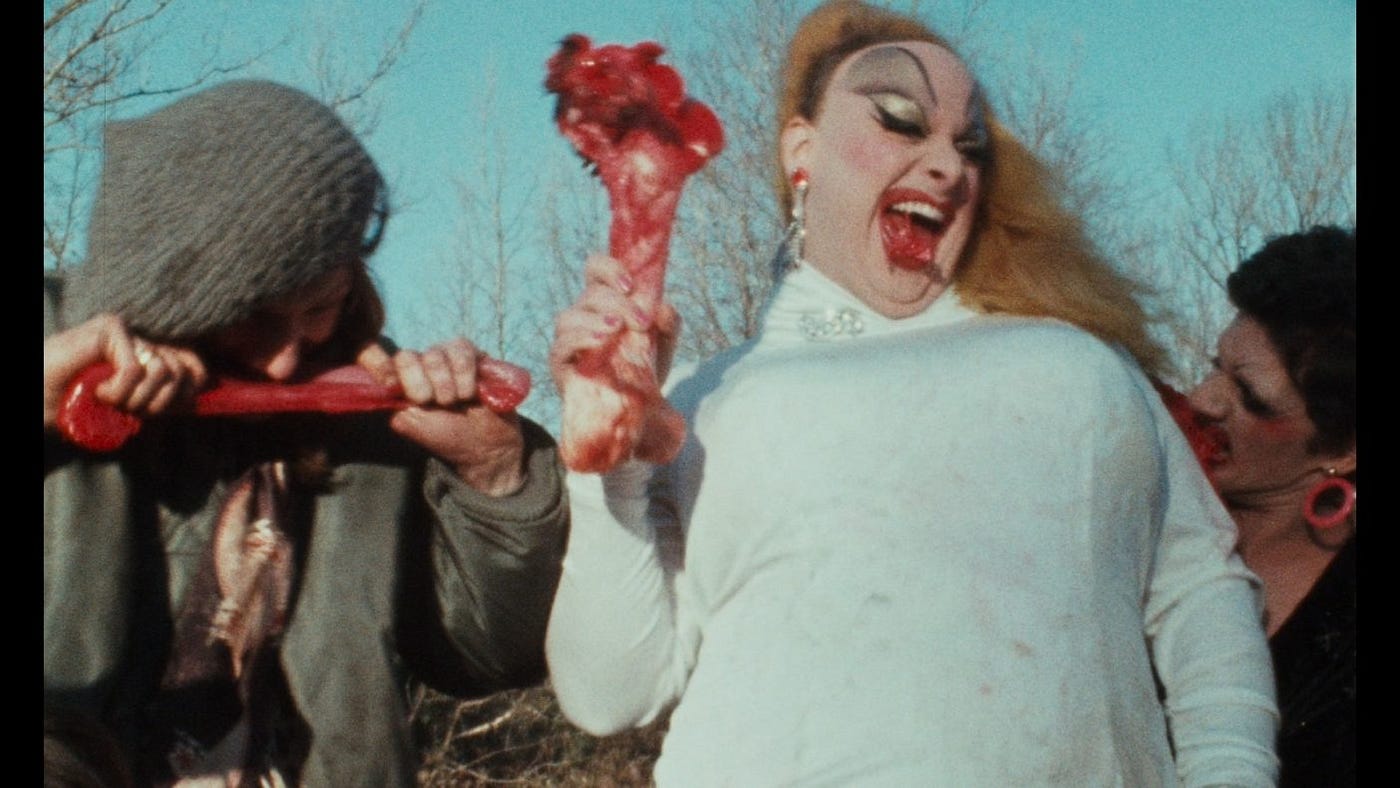
The family unit also receives scrutiny within the film. Pink Flamingos shows the family unit as not being the (at that time at least) Mom and Dad and 2.4 children ‘nuclear family’ model but as being more fluid and as being whoever you choose it to be. Divine, her mother Edie, her son Crackers and their ‘travelling companion’ Cotton constitute their own family unit which is at serious odds with the family unit harped on about by political parties. Divine and co are the literal embodiment of the ‘nuclear’ family and a million miles away from the duller more metaphorical form found in the advertisements of the time and for decades to come. They are shown to love each other deeply and there’s a feeling that it’s them against the world.
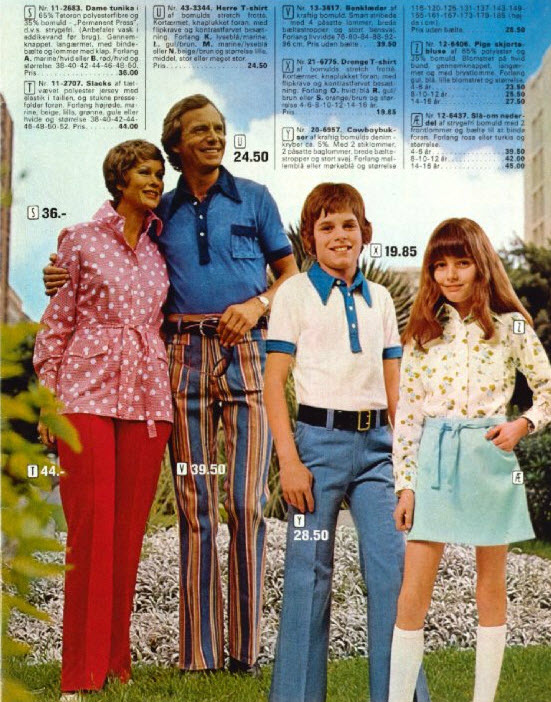
Theres also another family reference within the film that at the time would have shocked most audiences but also maybe made them look further at their values. This is the lesbian couple who adopt the baby from Raymond and Connie. Gay characters in a film at that time were few and far between but here they are and a positive representation too. They are shown as a loving couple who will give little baby Noodles his very best life. Lesbians adopting babies are completely normal now and this scene shows that Waters was again well ahead of the curve. He wasn’t just playing this scene for laughs but was injecting genuine social commentary into the film’s narrative. It reminds me of the Cavalcade of Perversions in his earlier opus Multiple Maniacs. Along with the puke eater and armpit sniffer, another sideshow attraction was ‘two queers actually kissing on the lips!’ As Waters is gay himself, he was presenting something that was reality for him but seen as an abomination by more narrow-minded people. He was gleefully pointing at the hypocrisy.

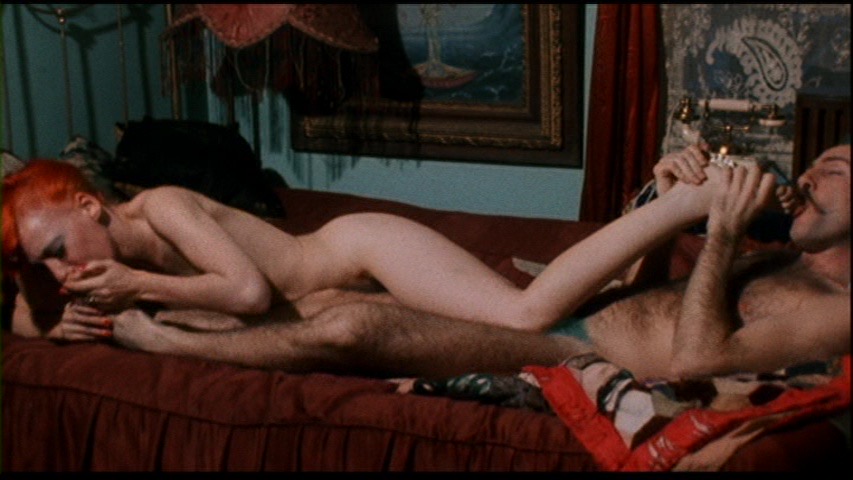
For all of their dysfunctional behaviour, Raymond and Connie Marble are also shown to be a deeply loving couple. It’s mid-shrimp (shrimping is a sexual practice that involves sucking your partner’s toes and caressing their feet for sexual gratification) that they proclaim their own very unique proclamations of love stating that they love each other more than the things they truly adore such as the sound of bones breaking, the sound of dogs dying and, yes, even more than their own shit.
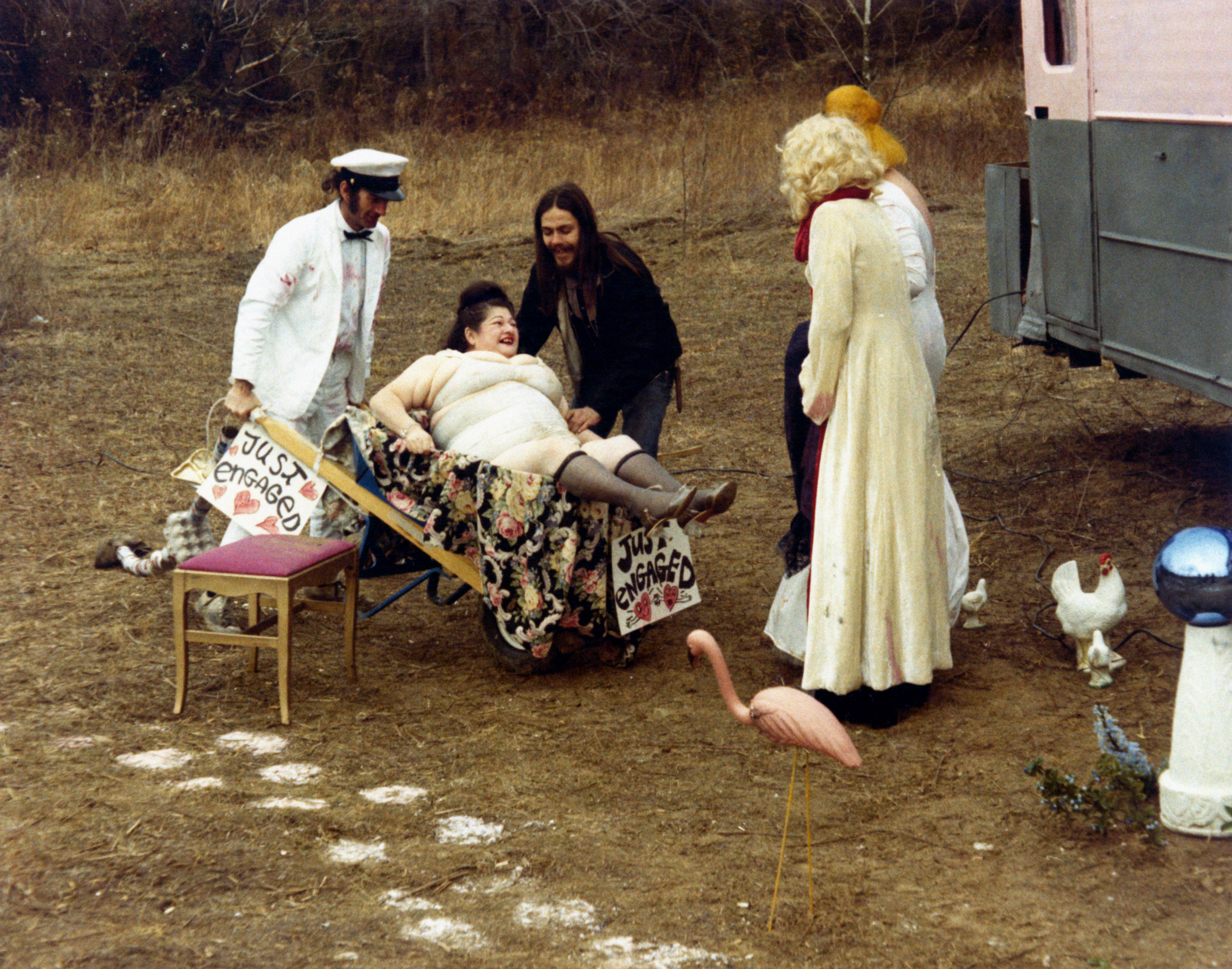
Theres also romance within Pink Flamingos. Edie goes to the birthday party with her beloved Eggman as her date. They are engaged and Edie leaves the film by being taken away in a wheelbarrow by her new husband-to-be. This is almost wholesome in the midst of all of the transgression within the film and is genuinely heartwarming. Everyone should find their Eggman.
Divine is also shown to possess a moral compass. This comes into force when she encounters the girls in the pit at the Marble residence. Divine listens to their protestations about how they have been treated by The Marbles and Channing and so decides to let them exact a very fitting revenge on the manservant in the form of castration. Maybe the girls in the pit were a distinct influence on Joel M Reed when he was making his opus Bloodsucking Freaks. There’s even a similarity between both films in the form of eating ears (of all things). One of Sardu’s captive women is shown to chow down on an ear in Reed’s film whilst Divine eats Cookie’s ear which is brought back to her after she is killed by Crackers and Cotton during the deleted home invasion scene. Warped minds think alike.

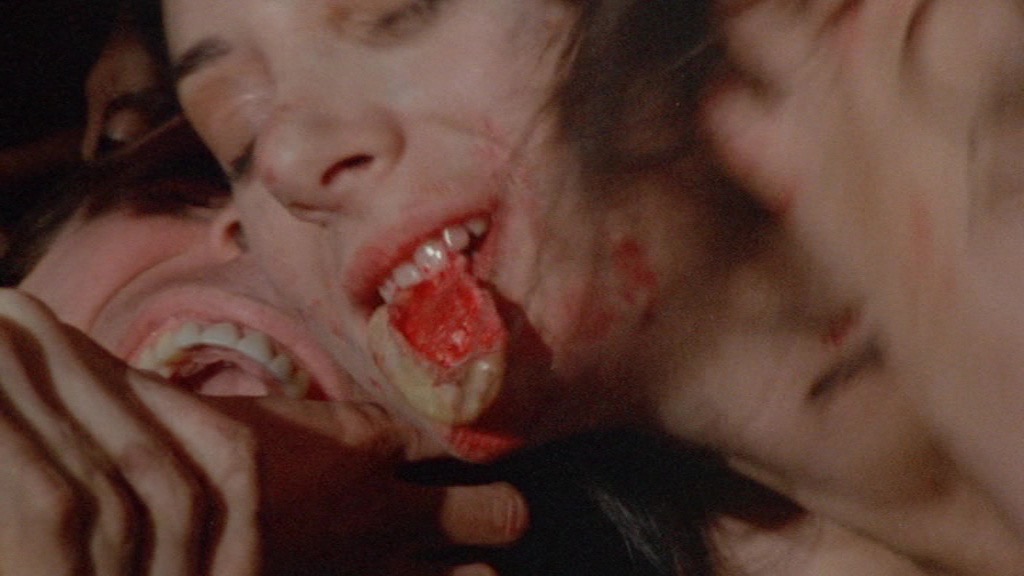
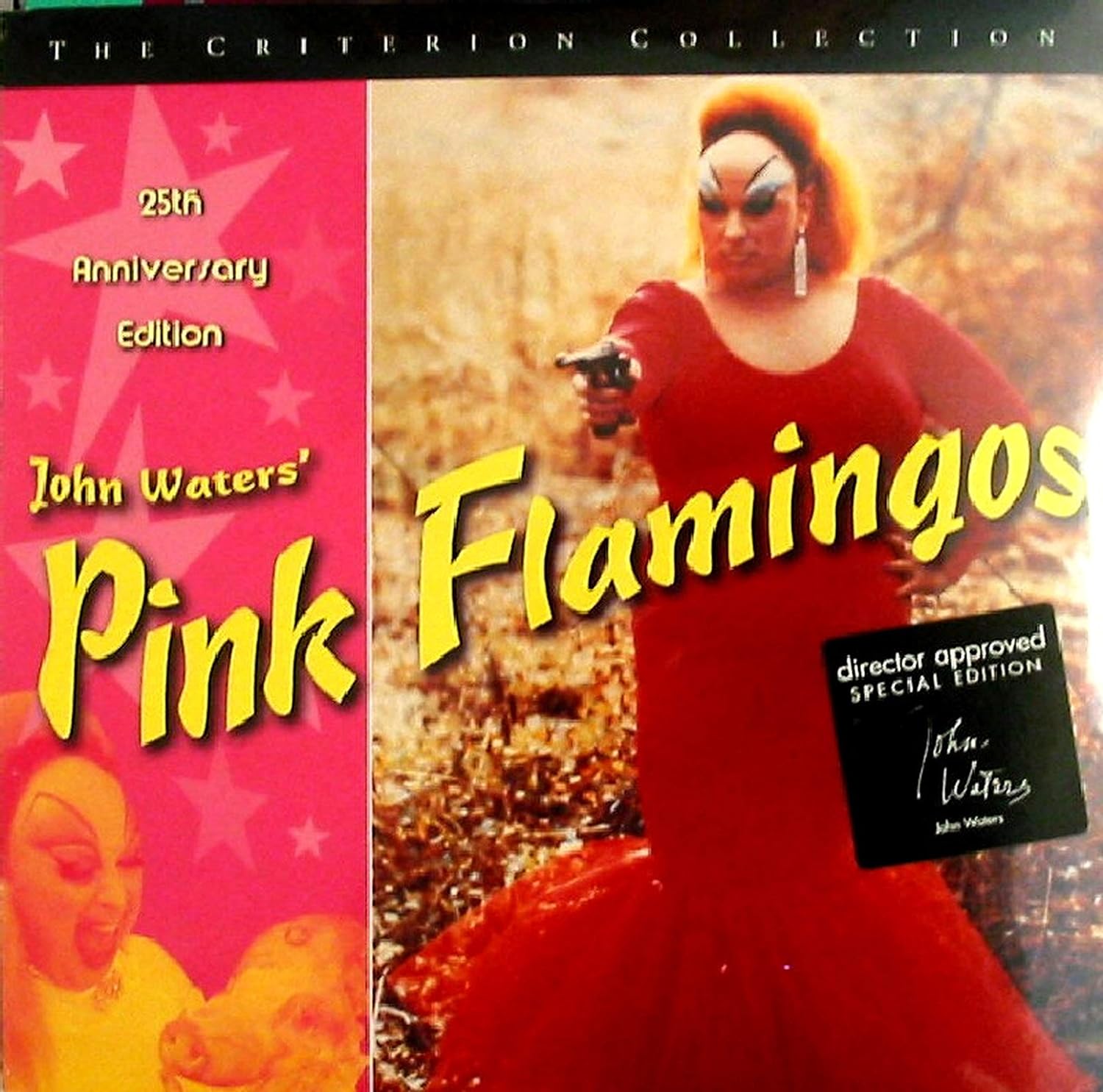
But whilst the film’s contents are genuinely subversive and transgressive, Pink Flamingos’ legacy is just as twisted. From being one of the most censured and prosecuted films of all time, it’s now massively lauded with history judging the film in the best possible way. As previously noted, the film is now available on Blu-Ray courtesy of Criterion. The company had previously given the film a laserdisc release in the 90’s and appeared to have recognised the film for the masterpiece it always was earlier than most. Pink Flamingos was also entered into the Library of Congress National Film Registry in 2021. Pink Flamingos is listed as the =211th Greatest Film of All Time by the British Film Institute.
But the greatest accolade regarding the film has been given by Waters himself. He says that Pink Flamingos acts as a great date movie when screening potential suitors. He’s known people who have seen the film on a first date and then gone on to get married. He also says that there have been those who have been shown the movie on a first date and run away screaming. He compares it to when Travis takes Betsy to a porno theatre in the movie Taxi Driver. If you show Pink Flamingos to a new partner and they love it, you know you have a keeper.
Pink Flamingos also holds the distinction within cult cinema in that it actually lives up to its hype. I was so nervous before I saw the film for the first time that it would be a disappointment. I needn’t have worried. It was heady stuff, offered more than I was expecting even though my expectations were extremely high and seems to have become even more shockingly brilliant over time. This has been proved in the best possible way. Every Saturday night at my local cinema there is a screening of a cult film. Due to the student population living in the area, there are usually a lot of younger audience members in attendance. Unfortunately, some of these youngsters think that a ‘cult’ film is one that is *gag* ‘so bad it’s good’. These people think cult films are like The Room starring Tommy Wiseau and want to point and laugh at the film on the screen. This means that these morons have laughed at genuinely brilliant films such as Assault on Precinct 13 and The Terminator (I heard one fuckwit say into her mobile phone after a screening ‘I’ve just seen the worst film ever made. It was called The Warriors!’) as they wouldn’t know brilliant cinema if it spat in their faces. However, on two occasions I have seen these cynical audiences stunned into silence by what they were seeing. One was a screening of The Evil Dead and the other was, you guessed it, when Pink Flamingos was shown. This is another brilliant quality of the film- it can render assholes speechless. That’s no mean feat.
 Meathook Cinema