
1983’s Silkwood concerns Karen Silkwood, a plucky trade unionist who works at Kerr-McGee nuclear facility making fuel rods for nuclear reactors. Shes concerned by managers falsifying safety reports, cutting corners and retouching photographs of fuel rods to hide shoddy work and starts to campaign for these concerns to be rectified for the people who work at the plant. She collects evidence regarding her concerns and arranges to meet a New York Times reporter to hand over her evidence so that she can blow the whistle.

I won’t spoil the film by saying what happens next. All I’ll say is that this scene is heartbreaking, with Karen’s rendition of Amazing Grace playing over the soundtrack as events come to a shocking conclusion. This scene will stay with you long after the film has finished.
There’s so much to love about Silkwood.
Firstly, the performances are uniformly stunning. Kurt Russell as Karen’s boyfriend and Cher (in one of her first dramatic roles) are both fantastic. Cher, playing a lesbian (named Dolly!), was pushing boundaries at the time, and her character never feels like it panders to stereotypes or parody. But it’s Meryl Streep as Karen who steals the show. Everything about her portrayal is jaw-droppingly brilliant. Even her body language and how she carries herself are totally different from any other role she’s taken on. She was rightfully nominated for an Oscar for her performance, as was Cher and Mike Nicholls for his brilliant direction.
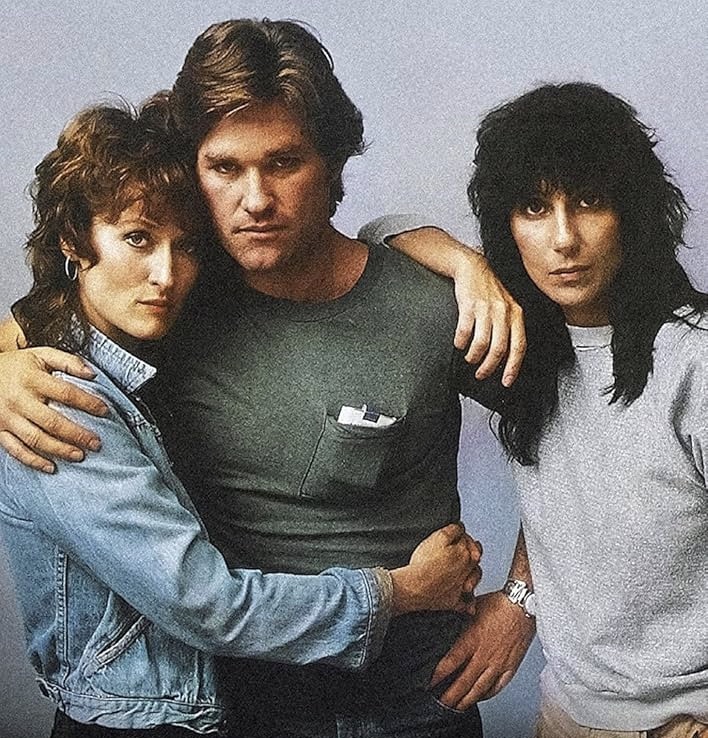
I also love the fact that there’s so much character development with the main protagonists. Dolly’s new girlfriend moves in (played by Mommie Dearest’s Diana Scarwid) and proceeds to completely alienate everyone in the household. When she leaves to go back to her husband and kids, this leads to a huge argument between Dolly and Karen. When they apologise, the scene highlights another brilliant aspect of the film- it’s a great sisterhood movie. Silkwood would blow the Bechdel Test to smithereens. It’s a beautiful thing to behold. Karen is also battling with her ex-husband to try and gain more time with their kids. All of this drama is worthy of a movie of its own, even if there wasn’t the main storyline concerning what’s going on at Karen’s workplace.

I kept thinking of Paul Schrader’s Blue Collar whilst watching Silkwood, with the battles between trade unions and money-hungry managers being highly prevalent and with very deadly results. There are also enough real-life cases to suggest that in certain circumstances, human lives are expendable when money and a company’s reputation are at stake. Watch as shadowy figures plant rumours that Karen might be to blame for contamination in the plant or that her campaigning might mean that the plant is closed down and a massive number of people lose their jobs. Then, watch in horror as the more Karen ruffles feathers within the organisation, the more she finds that she is contaminated and privy to the dehumanising body scrubs. It’s almost as if…

Jane Fonda was first mooted for the role of Karen, but when this incarnation of the project fell through, it commenced with a new production company and with Streep, who was fresh from working on Sophie’s Choice. Silkwood and the other Fonda movie, The China Syndrome, would make a brilliant double-bill.
On doing a Google search on Karen Silkwood, I see that there’s renewed interest in her case and what exactly happened to her. The new podcast called Radioactive- The Karen Silkwood Mystery should make for a fantastic listen with long-lost tapes and evidence being unearthed. Let’s hope Karen finds justice from beyond the grave.
1983’s Silkwood also serves as a fantastic epitaph.
5 out of 5 stars
 Meathook Cinema