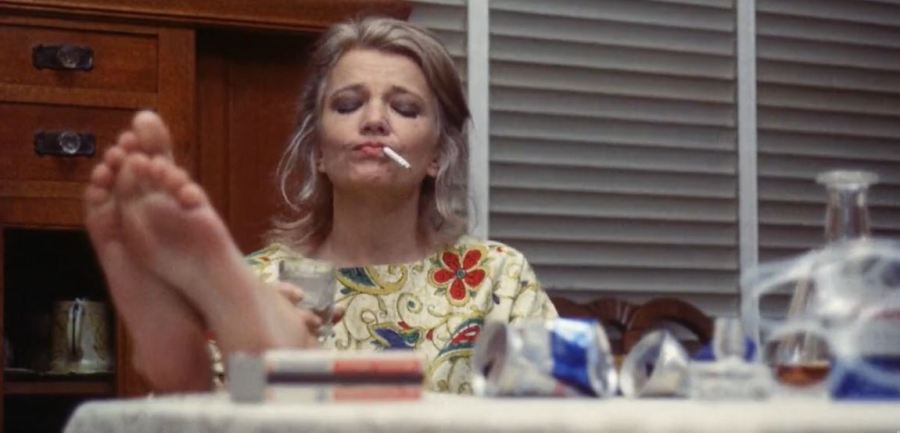
Mabel Longhetti is married to Nick and they have three children. Her husband is getting increasingly worried by her seemingly wayward behaviour. This is demonstrated in the film by a couple of incidents. Early on we see her go to a bar and pick up a man after her husband is waylaid at work. The man she picks up takes her home and stays the night even though she is blind drunk. He leaves the next day and thankfully just before her husband comes home with all of his workmates for breakfast. She offers to make them all spaghetti (!) but during the meal asks their names even though she has met many of them before. She gets overly familiar with one of the men and this prompts Nick to ask them all to leave.
On another occasion, she arranges a play date with her kids and some of their friends. The father of the friends attends also but doesn’t want to leave as Mabel’s behaviour is so unpredictable and he doesn’t feel safe leaving his children with her. Nick comes home to find the children running around the place as if they have no adult supervision. He gets into an argument with the father and ends up hitting him. The father takes his children and promptly leaves.
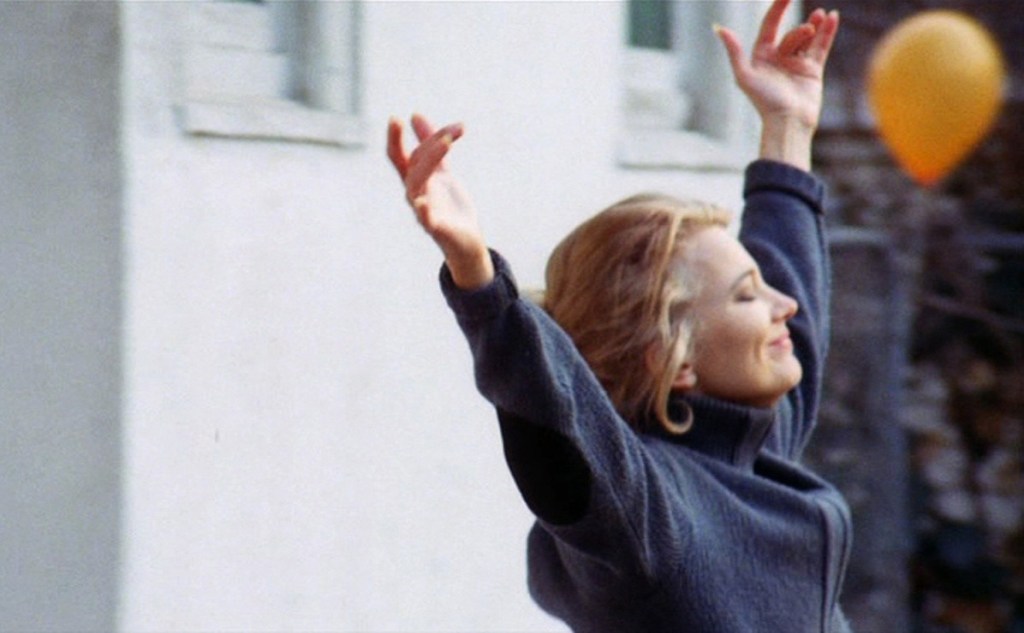
It’s at this point that Nick calls Mabel’s doctor to evaluate his wife’s mental health. She is then committed. Six months later she is released from the mental facility she was resident in. Her family are there to welcome her and she appears to be a shadow of her former self. When they start to leave, Mabel seems to resort to her former state by demonstrating more wayward behaviour by climbing on her couch and humming the theme to Swan Lake as if she is somewhere else entirely. She then runs into the bathroom, grabs a razor and cuts her hand. To bring her back to her senses, Nick hits her. He then puts their children to bed, tends to Mabel’s cut hand and then they get ready to go to bed themselves as if nothing has happened.
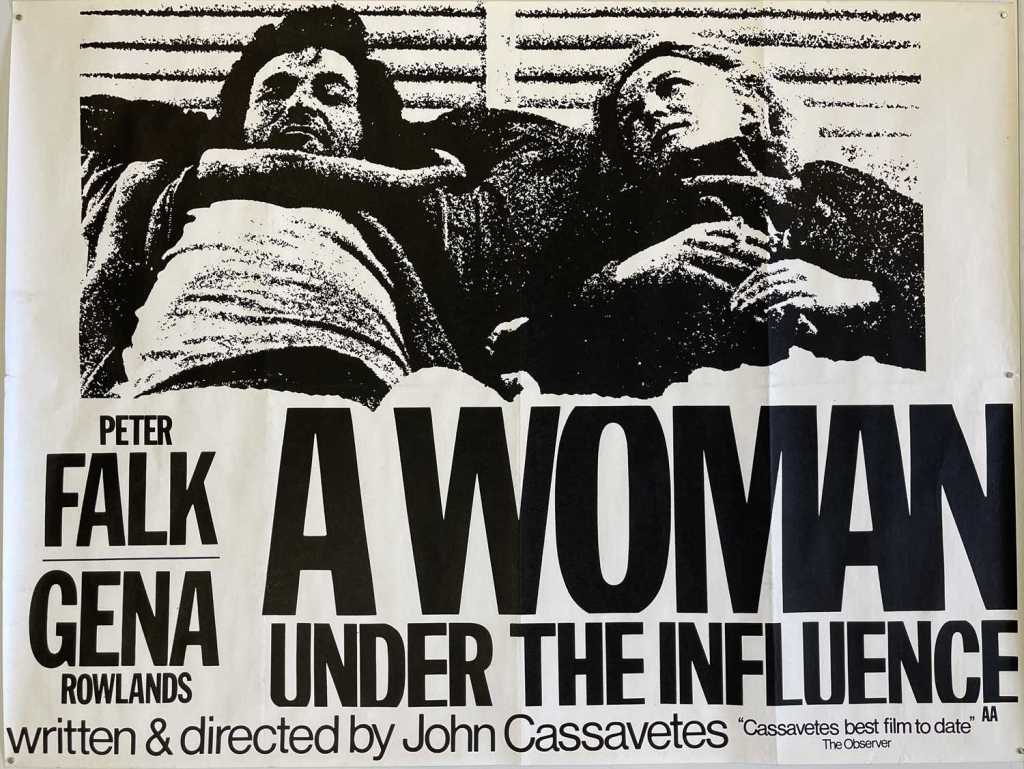
A Woman Under The Influence was written and directed by John Cassavetes at the behest of his wife Gena Rowlands (who plays Mabel). He had originally written it was a play but Rowlands thought that it would be too long and too dark for the stage and so it was adapted for the screen instead. Cassavetes tried to get funding for the project but was unsuccessful. Instead, he remortgaged his house and asked his family and friends to invest. Actor Peter Falk (who plays Nick) invested $500,000 as he loved the script so much. This was how the film was made.
Similarly, Cassavetes couldn’t find a company who wanted to distribute the movie. Instead, he contacted arthouse cinema owners himself to show it. He also contacted colleges to show it with himself and the stars of the film appearing to answer questions after the screenings. Richard Dreyfus appeared on a chat show and talked about the film. He said how much he loved it which prompted others to seek out the film and experience it for themselves.
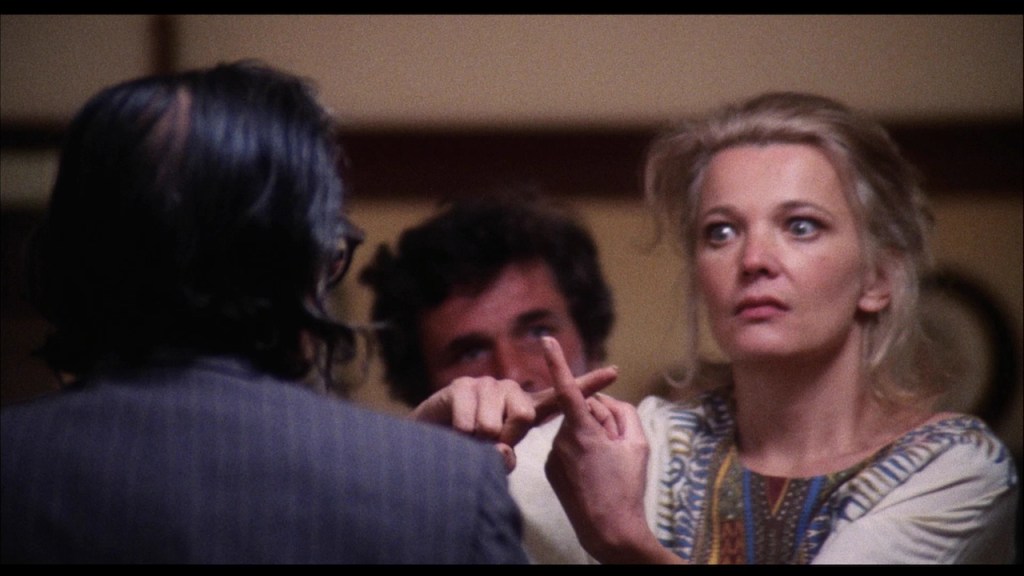
On seeing the film for the first time, I can see why Cassavetes and co were so passionate about it. This is one of the toughest but most rewarding films I think I’ve ever seen. If R D Laing made a film about the insanity in the so-called ‘normal’ family it would look like this.
Is A Woman Under The Influence a metaphor for convention, with the wayward woman being taken into hand so that she can fit better into the mould of the hausfrau and Stepford Wife? (In fact, this film would make for a brilliant double-bill with The Stepford Wives). There’s a sense of conventionality and ‘being normal’ that Nick seems to want to force on not just Mabel but also on his kids. A case in point is when Mabel leaves the hospital and starts to joke around with her assembled guests. Nick blows up and wants her to be ‘normal’ and just have a ‘normal’ conversation like other people do when they get together. This extends to Nick when other events take unexpected turns such as when he causes the injury of one of his workmates. He insists that he has to spend time with his kids and take them to the beach. To do this he takes a workmate to drive for him as he drags his kids out of school and they go to the beach even though it’s not the perfect conditions for such a trip and because it’s what he perceives as being ‘normal’.

As you can tell gender stereotypes and sexual politics play a huge part in the film. As an aside, the spaghetti scene is just as deranged as the spaghetti scene in another 1974 film, John Waters’ Female Trouble. Maybe there was something in the air…
The acting in the film is top notch with numerous awards being won or nominated for and for good reason. Rowlands was even nominated for an Academy Award for her turn with her husband also being nominated as Best Director. It’s so fantastic to see a film in which actors are given the time and space to develop their roles and to feel free to do this but without any performances toppling over into narcissistic overacting (Hereditary, take note). The performances in this film are nothing short of breathtaking. It’s not often that I agree with Roger Ebert but with this film, I agree with him that this is a revelation.
I got the sense watching this film that anything could happen whilst being utterly gripped by what was unfurling before my eyes. That’s the mark of a great movie. I look forward to exploring more of Cassavetes’ movies.
4.5 out of 5 stars
 Meathook Cinema