
Growing up, one of my favourite film books was Movies of the Seventies, edited by David Thompson. One film it highlighted was Nicolas Roeg’s Walkabout from 1971. The stills from the film looked absolutely stunning, with the plot synopsis fully whetting my appetite.

I then read in the excellent and much missed Premiere magazine that the film couldn’t be released as it was in the middle of some kind of rights red tape hell which prevented it from being distributed on home video.
But it was also at this time that, out of the blue, it was shown on late-night TV in my area. It may not be available on video but this didn’t prevent it from being shown on television stations. I recorded the film and was glad to see that it was just as brilliant as I knew it would be.
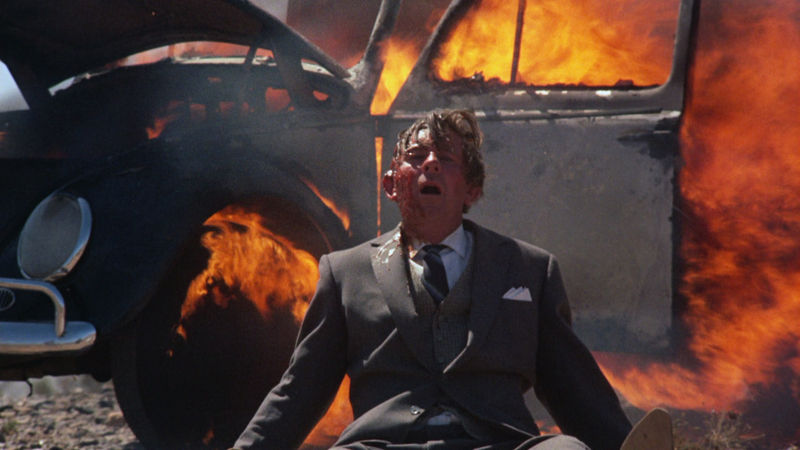
Walkabout begins with a father collecting his son and daughter from school to seemingly take them for a picnic in the bush. Events take a sinister turn however when he pulls out a gun and starts firing at them. They hide however and so remain unharmed. Their father sets his car on fire and turns the gun on himself. The daughter downplays this for the sake of her younger brother and collects the food they were due to eat and starts to walk further into the bush with her brother.
The next day, they come across an oasis water source and a fruit-bearing tree and so can eat, drink and wash. However, the next day they discover that the water has evaporated because of the heat. It’s at this point that they are discovered by an Aboriginal boy. He can’t speak English, just as they can’t speak his language, and so they communicate by gesture instead. Using this method, the boy communicates that they are thirsty, and so the Aboriginal boy shows them how to access water under the oasis bed.
The rest of the film involves how they survive off the land and how the teenage girl and her younger brother will find their way home.
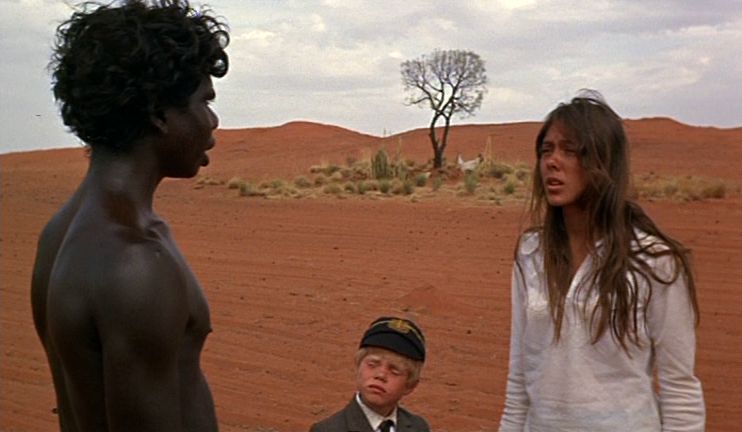
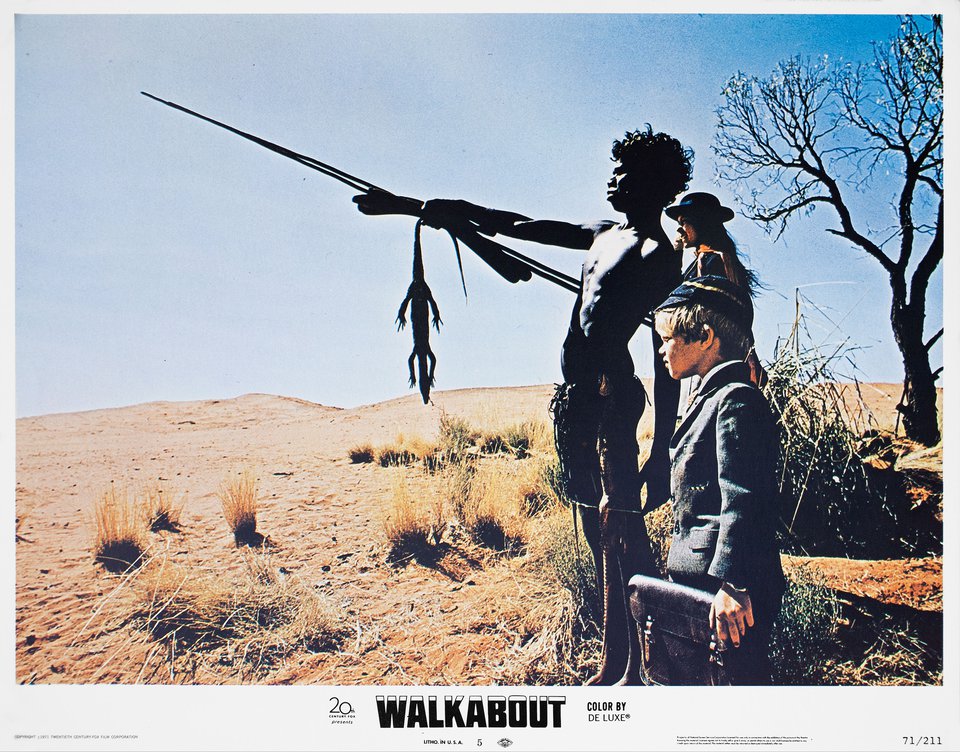
I love the fact that none of the characters within the film have names and are just referred to in the credits as terms like ‘girl’, ‘white boy’ and ‘black boy’. These main characters are played by Jenny Agutter (known to cult film fans as having starred in such gems as An American Werewolf in London and The Railway Children), Luc Roeg (the son of the film’s director, Nicolas Roeg) and David Gilpilil (who also starred in Crocodile Dundee and Rabbit-Proof Fence).
I also love how the girl’s maternal instincts come to the fore as soon as she finds that her and her brother are having to fend for themselves after her father’s suicide. When they join forces with the Aborigini boy, they instantly become a surrogate nuclear family and this is portrayed very endearingly.

Nicolas Roeg photographs the film so beautifully with a cast of Australian creatures who become stars in their own right. But, the brutality of having to feed off the land and some of its inhabitants is also shown, no holds barred. One aspect of Roeg’s direction is that he manipulates footage so that some sequences that we see play forward suddenly play backwards, in slow motion or stop in freeze frame. We see one animal that has been shot miraculously coming back to life, and in one very startling scene, the father’s suicide happening in reverse so that he resurrects back to life. This trickery gives Walkabout a hypnotic, hallucinatory and kaleidoscopic quality that isn’t easily forgotten.
There are also very interesting intermissions involving characters that we won’t see except in their specific sequence. We have the hilarious Carry-On bawdiness of the weather researchers, the brutality of the professional animal hunters and the white souvenir manufacturers resplendent with Aboriginal workers who are wearing Western clothes as opposed to the traditional garb of the Aboriginal boy who is one of the film’s main characters.
There are many readings of the film and what it all represents. Some have suggested that the movie holds a religious meaning with the resurrection footage of the father, the snake in the tree we see as the teenage girl sleeps and the three characters swimming in their own Garden of Eden at the film’s conclusion all adding to this.
However you interpret Walkabout, its beauty, brutality and utter brilliance are hard to deny. There are scenes that burrowed their way into my head just as do with a key character at a certain part of the film. And no, I’m not going to divulge any more.
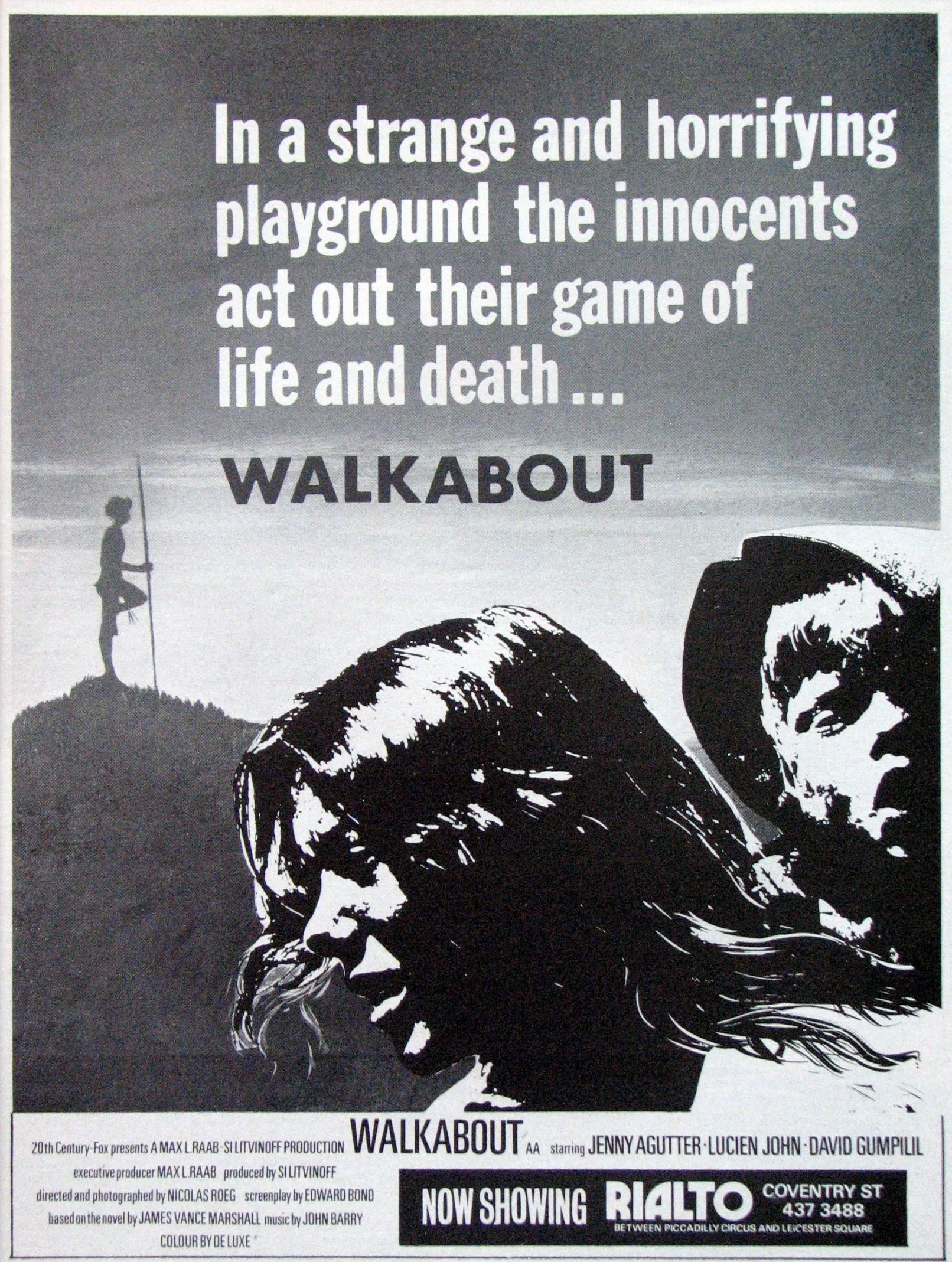
Walkabout was entered into The Cannes Film Festival in 1971 along with another Australian masterpiece, the nightmarish Wake In Fright. Both films are absolutely amazing and would make a fantastic double bill.
Thankfully, Walkabout is no longer stuck in rights red-tape hell and has also been given the Blu-Ray treatment by two of my favourite labels, Criterion and Second Sight. Both editions lovingly give the film the respect it deserves.
The source novel (also named Walkabout) by James Vance Marshall is also highly recommended and is also very different from the film.
 Meathook Cinema