Beware- there are spoilers ahead!
Mary Henry is in a car with two of her friends when another car full of youths challenges them to a race. Whilst both cars are next to each other on a bridge, the vehicle containing the young women is rammed over the side and into the river down below. Passers-by and the police are now in attendance, and the young women are thought to be dead as their car has been underwater for so long. But then, unexpectedly, Mary stumbles ashore, dishevelled and disorientated.

This disorientation continues as Mary accepts a job as a church organist in the nearby town of Salt Lake City. She regularly sees a mysterious and very threatening-looking man who seems to be following her. She also seems drawn to a mysterious pavilion, which she can see from the window of her room in the lodging house she is now a resident of.
I first saw Carnival of Souls in the early 90s when it was shown as part of the series Moviedrome, an outlet for cult cinema first presented by director Alex Cox and then film writer Mark Cousins. It’s a perfect film for that series and remains one of the most enigmatic.
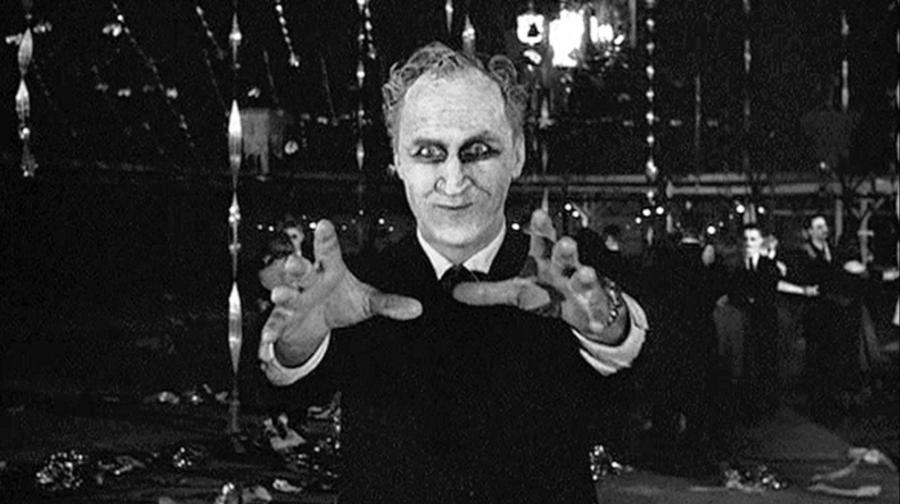
Carnival of Souls is an oddity. It seemingly came out of nowhere and has a look and feel all of its own. Director Herk Harvey funded the film himself, and as well as directing this gem, he also stars in it as ‘The Man’, the person Mary keeps seeing at every turn.

The sequences in which Mary seemingly doesn’t have a place in the world are both unreal and unsettling. The way that all sound is stripped from the action gives the audience the same feeling of otherworldliness that Mary feels. It’s also very unsettling when the sound of everyday life returns as Mary finds that she does have a place in the world again (theres a great sequence in which Mary hears a bird chirping and smiles as she realises shes back again). As a teenager seeing the film for the first time and feeling like he didn’t have a place in the world, this was extremely powerful and poignant.
I also love the sequence in which Mary starts to play the church organ, seemingly in a trance without the control of her hands. She is stopped by the vicar, who startlingly exclaims that what she has been playing is sacrilege and profane and fires her because of this.
Another noticeable aspect of the film is that it seems to be ‘proto-Goth’. The Man has a white face and black smears around his eyes. The sequence in which Mary tries to board a bus with all of the other passengers having the same visage and, of course, the ending at the pavilion with the same people dancing in exaggerated time and then coming to ‘claim’ Mary are uber-Goth.

The film then ends with the concluding event of the submerged car being brought up and Mary being beside her friends. She had been dead in the car all along. Or had she? The only other film that depicts a similar ‘in limbo’ character who should be dead but isn’t is Don’t Look Now, with Donald Sutherland’s character witnessing his wife journeying to his funeral with the two sisters who he had encountered earlier.


Carnival of Souls also features fantastic secondary characters such as the nosey landlady and the reptilian, sleazy creep who is also a resident of the boarding house. This isn’t a one-character movie.
Whilst Carnival of Souls had been lost for many years, in recent times, it has been restored with added scenes and released on Blu-Ray on Criterion. It’s never looked or sounded so fantastic. Karma indeed.

 Meathook Cinema